
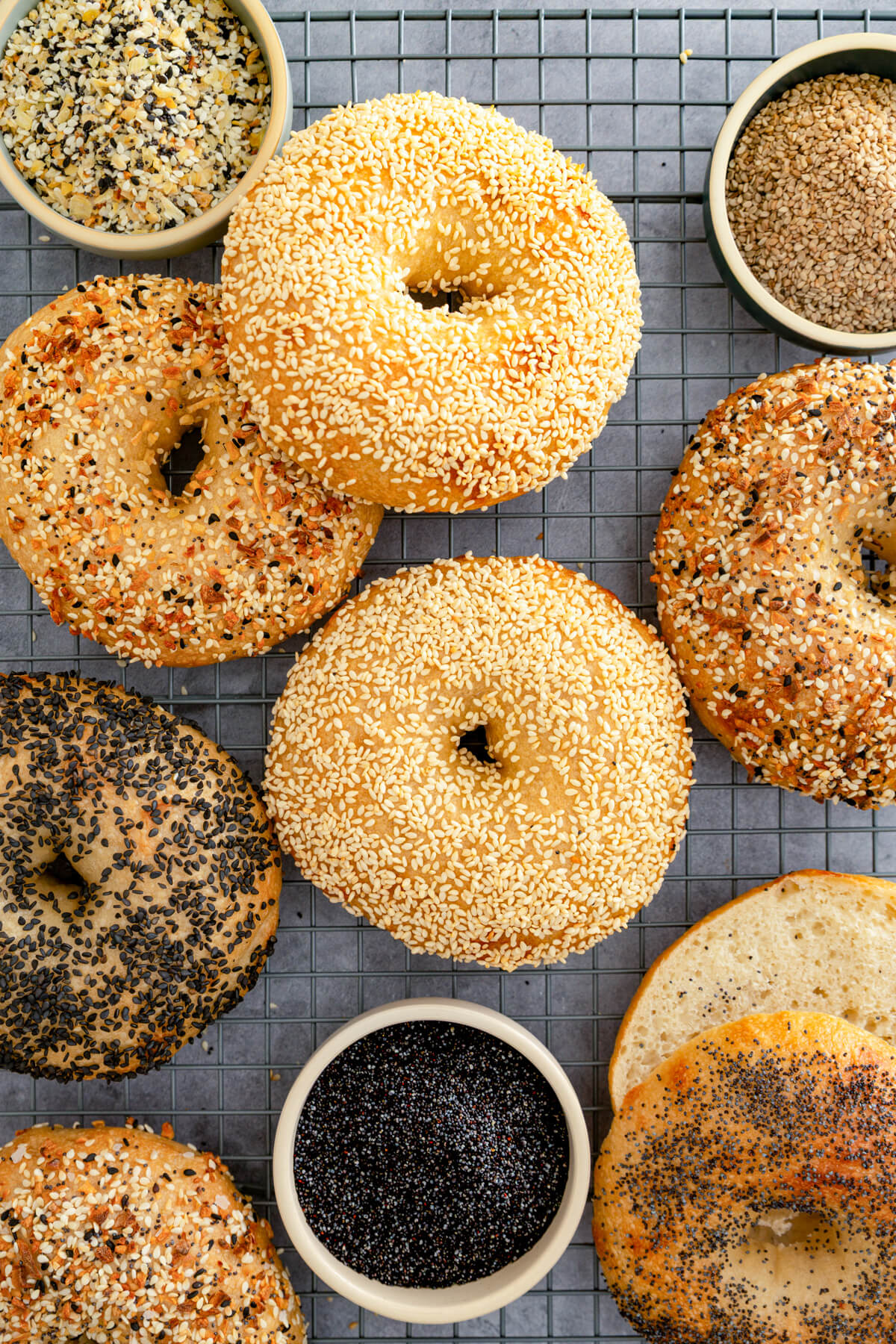
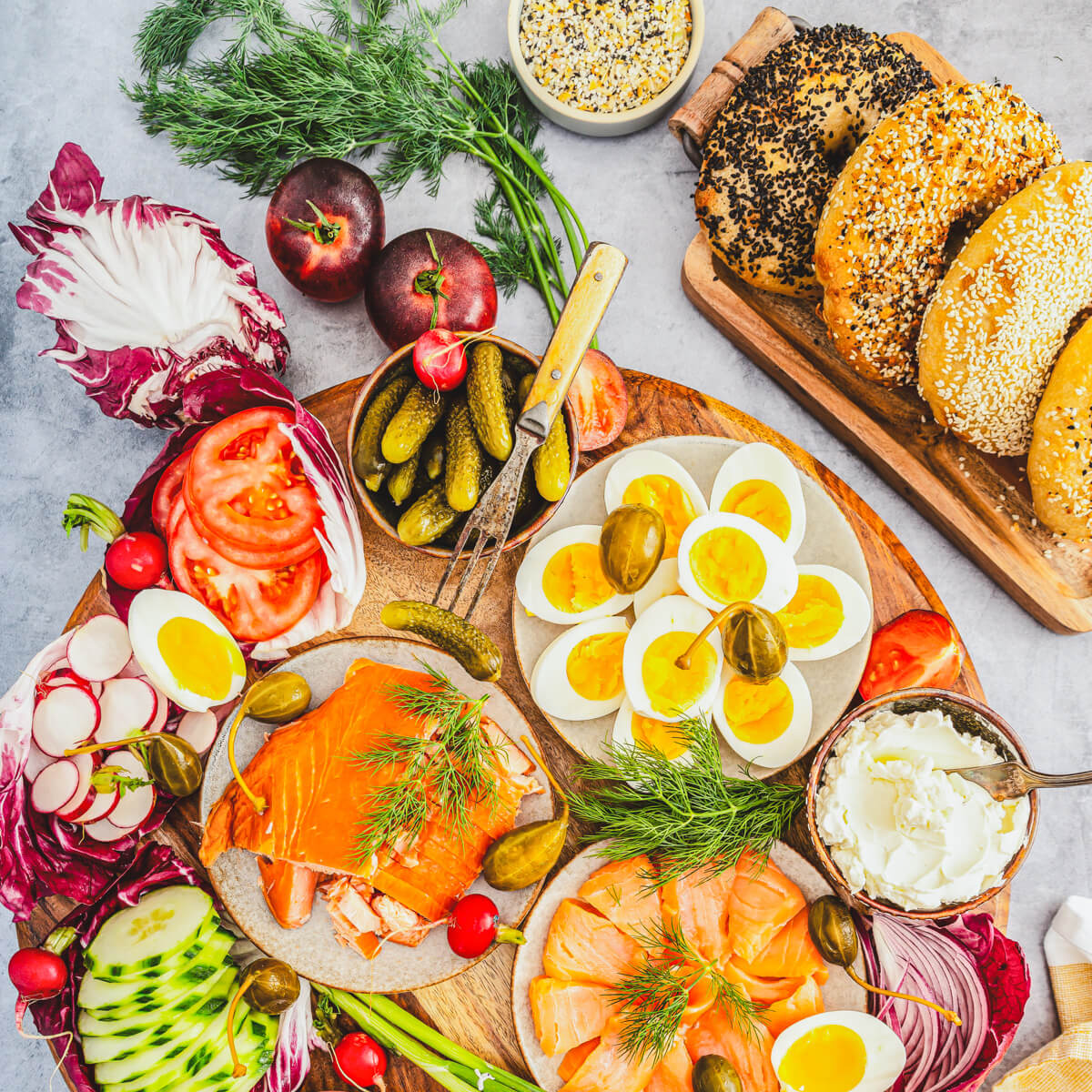
Are you ready for a baking adventure? This easy Homemade Bagels recipe guides you through mixing, rising, boiling, and baking your own batch of wonderfully chewy, yet tender New York style bagels with a perfectly thin, crisp, and slightly blistered exterior. Choose from an array of toppings or leave them plain and enjoy with a schmear of cream cheese.
There’s nothing like fresh baked treats for breakfast or brunch, be it decadent Double Chocolate Muffins, egg and sausage breakfast sandwiches with homemade English Muffins, or Kolaches filled with your favourite jams and jellies.
Want to save this recipe?
Enter your email below and get this post sent straight to your inbox. Plus, I’ll send you my weekly newsletter featuring the newest and best Dish ‘n’ the Kitchen recipes every week!
Homemade Bagels
Where are all my bagel connoisseurs at? This easy bagel recipe is for you! If grocery store bagels don’t cut it for you anymore, get out the flour and follow this detailed bagel recipe to learn how to bake your own!
But first a word of warning: this authentic bagel recipe requires making a sponge, kneading, several periods of ‘rise and rest’ boiling, and baking. The full homemade bagel recipe takes around 12 hours (including the overnight rise) while the condensed version takes around 6 hours.
Just in case you were thinking about it, shortening the fermentation time will result in a loss of flavour and structure.
For best flavour and texture, I highly recommend doing the overnight rest, then boiling and baking them the next morning. And yes, the boiling step is necessary because it sets the crust before baking, which is what gives bagels their chewy exterior and dense interior.
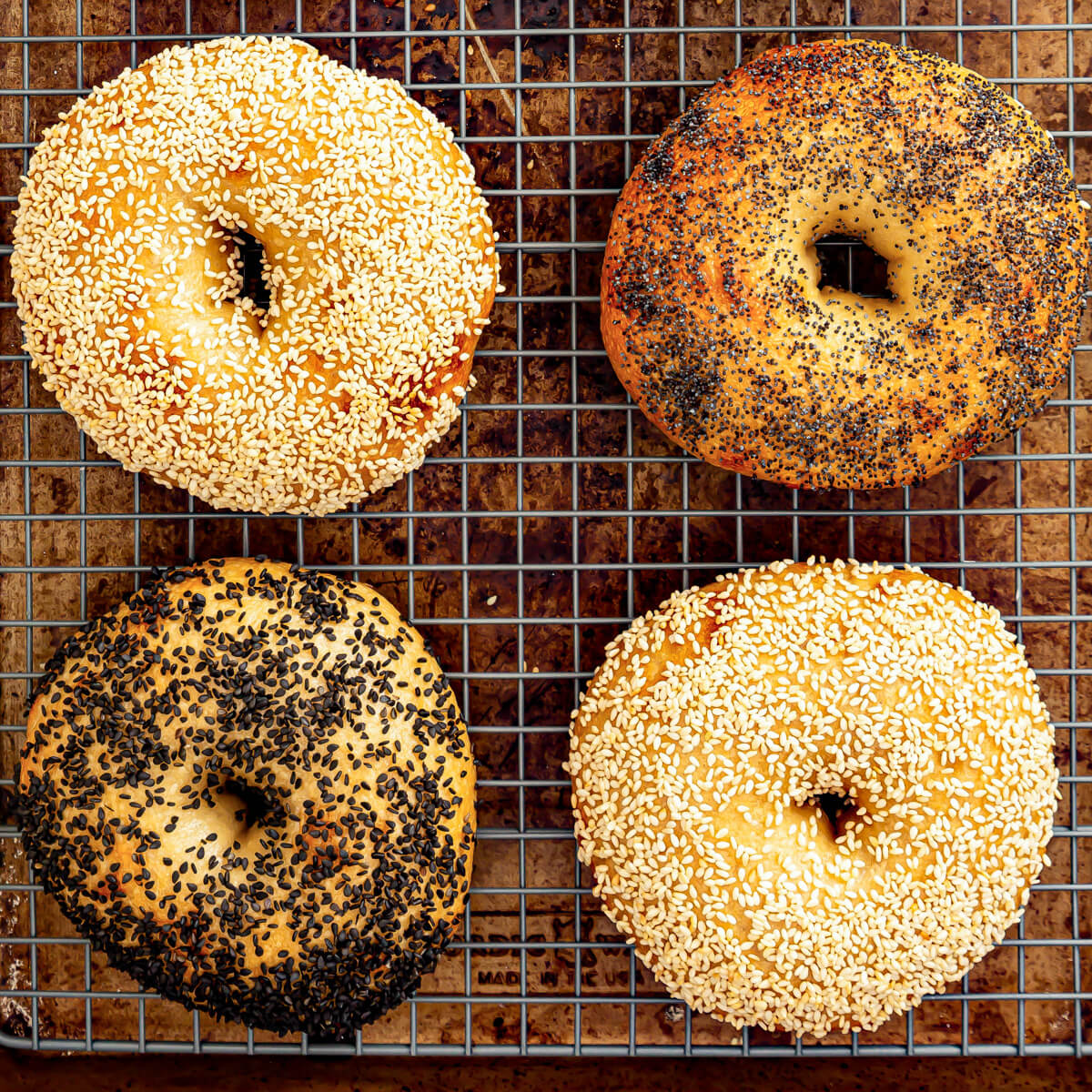
There are no shortcuts when it comes to authenticity. However, one bite of a homemade bagel and you’ll know it’s worth the time and effort. I have tested this recipe multiple times and it gets easier each time. Kind of like learning how to ride a bicycle!
PS. You will need a few specialty ingredients to make this recipe. Luckily you can find them on Amazon or your nearest specialty food store.
Ingredients for Homemade Bagels
For this recipe you will need a stand mixer fitted with a dough hook, a kitchen scale, large baking sheets, parchment paper, a large pot or Dutch oven, a slotted spoon or spider strainer, and a wire cooling rack. (Amazon affilate links)
- Water
- Granulated Sugar
- Active Dry Yeast
- Bread Flour
- Diastatic Malt Powder
- Kosher Salt
- Barley Malt Syrup
- Baking Soda
- Various Toppings
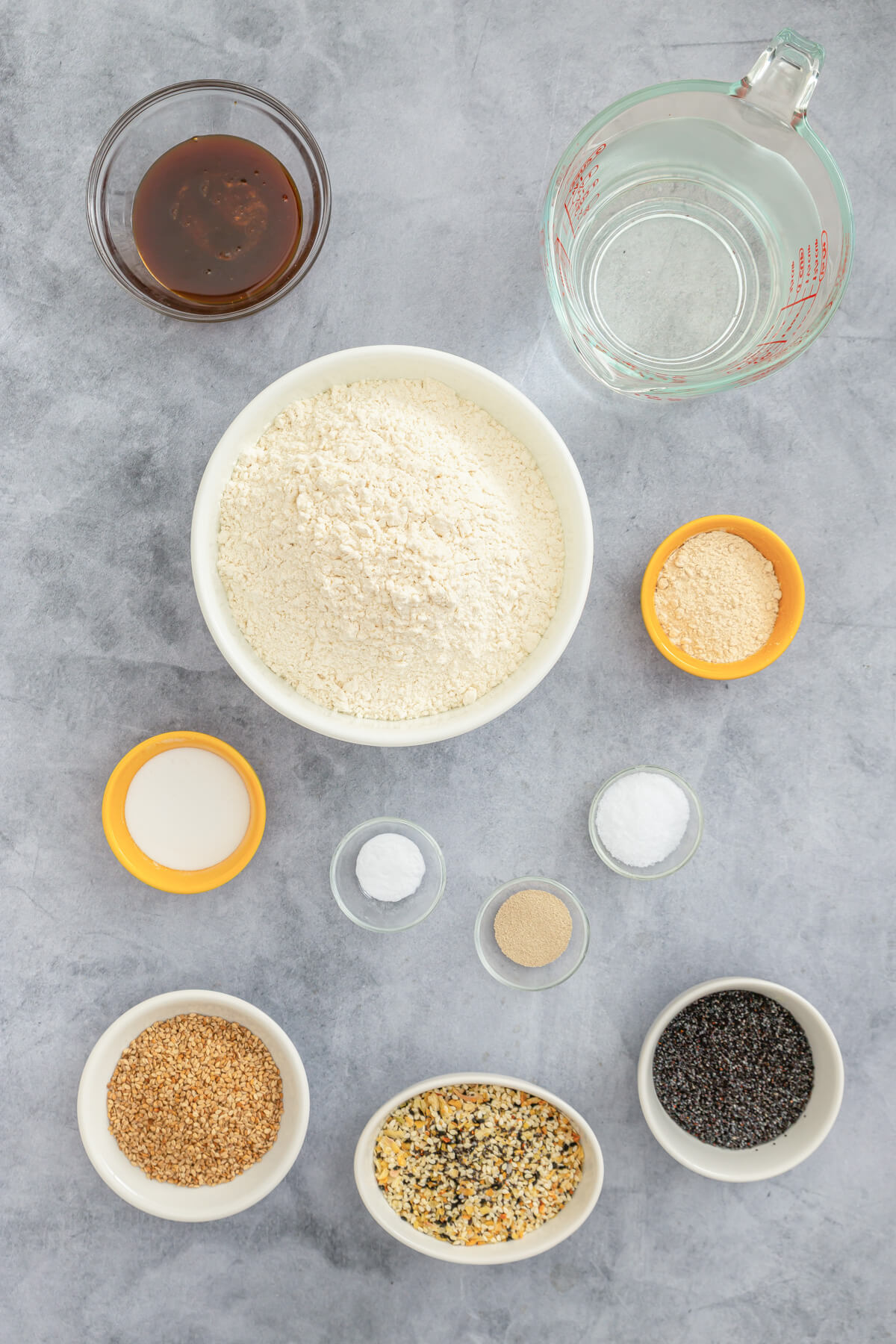
To activate the active dry yeast, use warm water (about 90°F) and feed it with granulated sugar and bread flour.
Use the active sponge to mix up the bagel dough, along with diastatic malt powder, fine Kosher salt, and more bread flour. Bread flour can be replaced with high protein all purpose flour, though the bagels will be slightly less chewy.
Diastatic malt powder
This ingredient feeds the yeast and improves dough strength. It helps the bagels rise properly while keeping the crumb tight and chewy rather than bready. Only small amounts are needed — too much can make the dough sticky and weak. Diastatic malt is especially helpful in long, cold fermentations like this one.
Diastatic malt powder should not be replaced with non-diastatic malt powder in the dough. If you don’t have it, omit it rather than substitute.
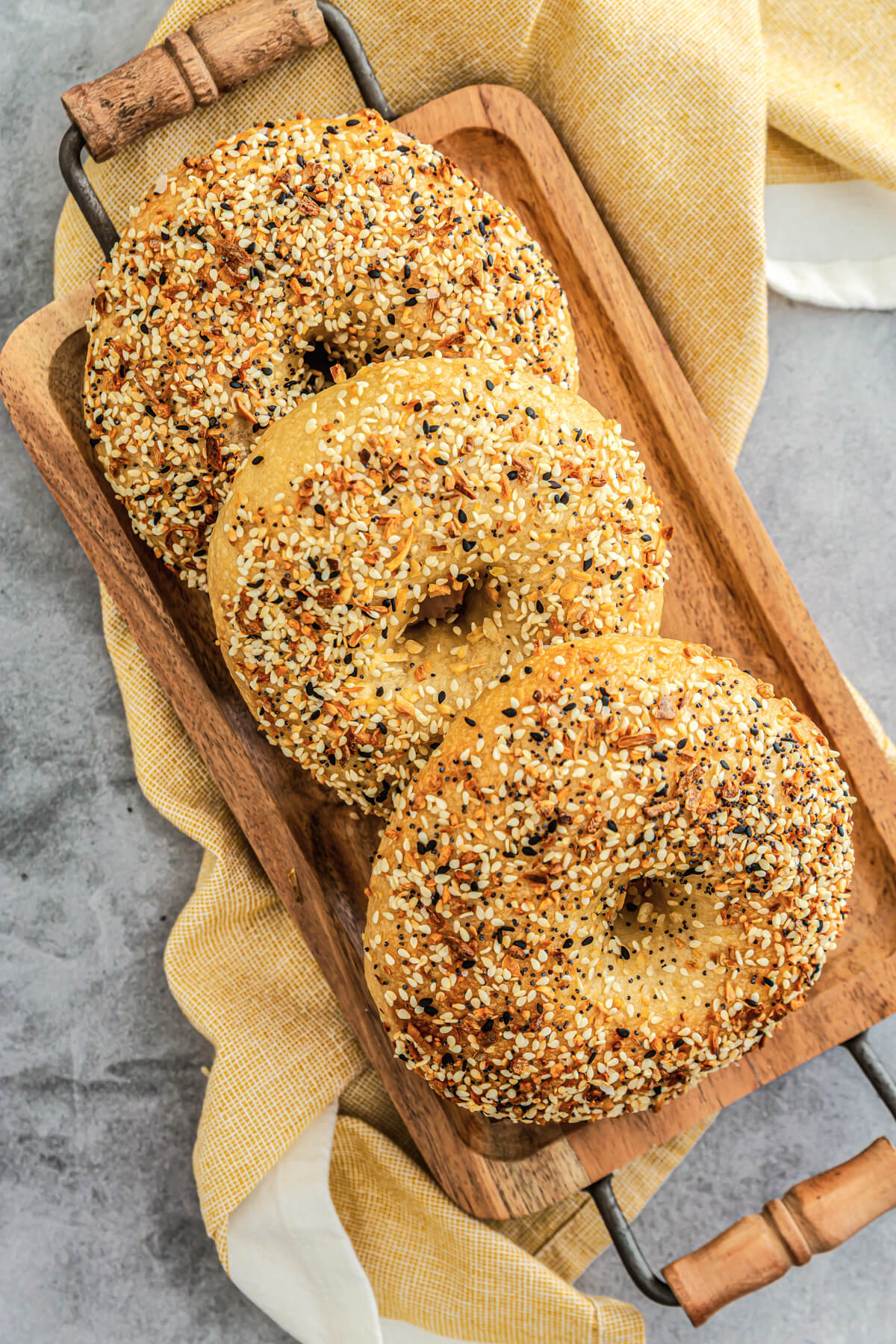
Barley malt syrup
This is traditional in New York–style bagel recipes and does two jobs: it adds subtle sweetness and helps the crust brown during boiling and baking. It also contributes to the slightly chewy, shiny exterior that bagels are known for. If you’ve ever had bagels that look pale or taste flat, missing malt is often the reason.
If you don’t have barley malt syrup for the boil, honey or brown sugar can be used. However, the flavour and colour will be different.
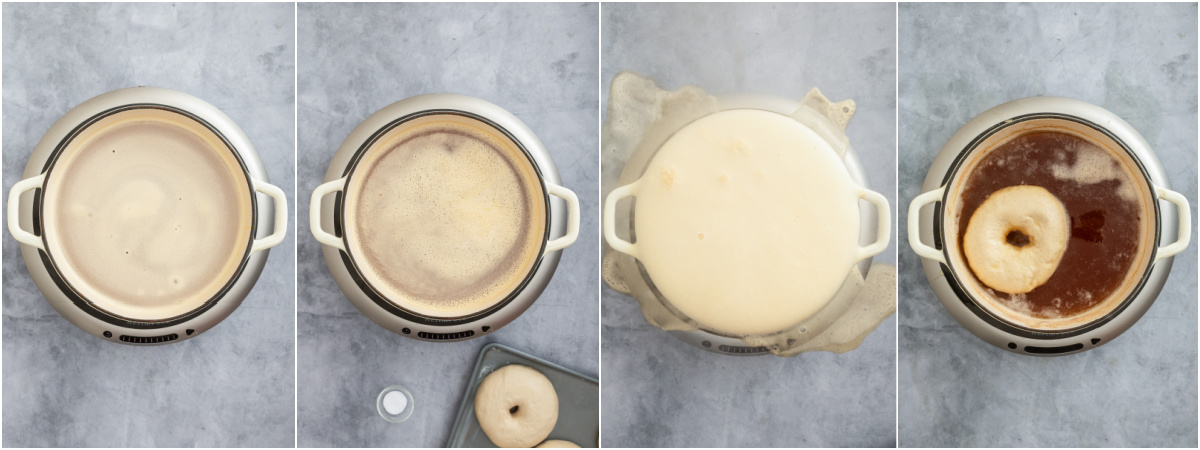
Baking soda raises the water’s pH, which improves browning and helps create a thicker crust. However, use extreme CAUTION when adding baking soda to the boiling water, make sure your pot has plenty of headroom. The water will bubble up aggressively for a moment, and a pot that’s too full can easily boil over. A wide, deep pot or Dutch oven works best.
How to Make Homemade Bagels
Make the Sponge
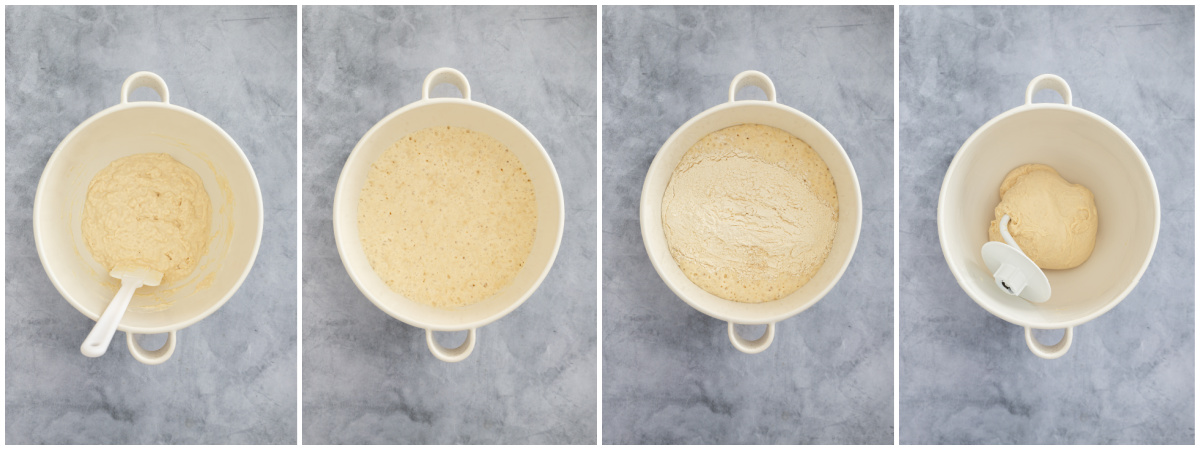
In the bowl of a stand mixer, stir together the warm water, sugar, yeast, and flour with a wooden spoon until smooth.
Cover the bowl tightly and set it in a warm spot. Let the sponge rise for about 3 hours, until it has tripled in volume and is full of bubbles.
Mix the Dough
Once the sponge is ready, add the remaining flour and the diastatic malt powder to the bowl. Fit the mixer with the dough hook and mix on medium-low speed until a shaggy dough forms.
Sprinkle in the salt and continue mixing. The dough needs a long knead here — about 20 minutes — to build the structure bagels need. When it’s ready, the dough should be smooth, dense, and elastic.
Cover the bowl with a damp kitchen towel and let the dough rest for 15 minutes. This short rest makes shaping easier.
Divide, Shape, and Rest
Line a baking sheet with parchment and lightly grease it. Weigh the dough and divide it into 130 gram portions. Keep the pieces covered with a damp towel so they don’t dry out.
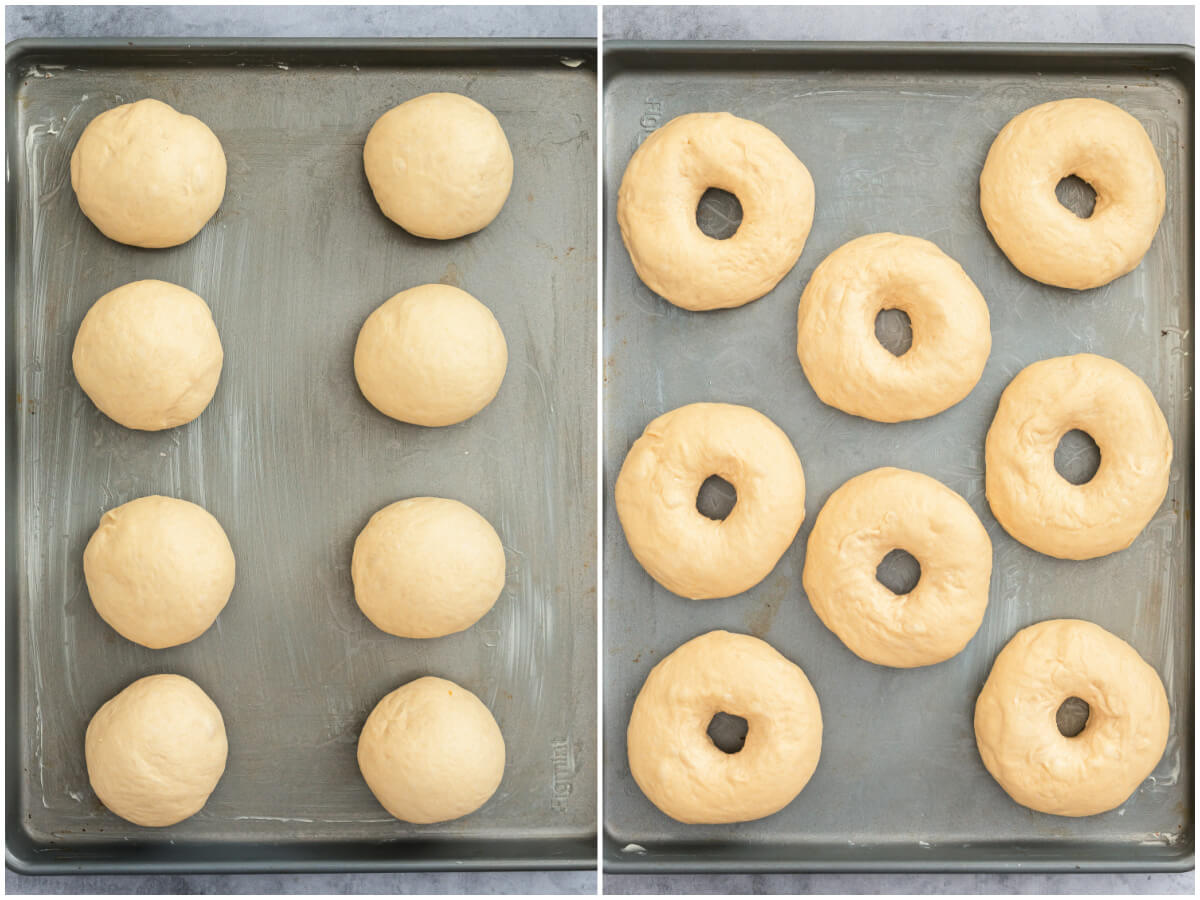
Working with one piece at a time, form the dough into a tight ball. Roll it against the counter under a cupped hand until the surface is smooth and the seam is sealed underneath. Place the shaped balls back on the baking sheet, cover, and let them rest for 10 minutes.
Using a damp finger, poke a hole through the center of each dough ball. Gently stretch the opening until the bagel measures about 4 inches across, with a hole roughly 1½ inches wide. The hole should look a little oversized — it will shrink as the bagels rise and bake.
Cover the baking sheet with plastic wrap and refrigerate the bagels overnight. This cold fermentation is key to both flavour and texture.
Boil and Bake
Preheat the oven to 425°F. Fill a large pot or Dutch oven with at least 3 inches of water. Stir in the barley malt syrup and bring to a full boil. Carefully add the baking soda and stir well.
Working in batches of 3 to 4, boil the bagels for 1 minute per side. Lift them out, let excess water drip off, and transfer to a parchment-lined baking sheet. Try not to boil more bagels than you can bake right away.
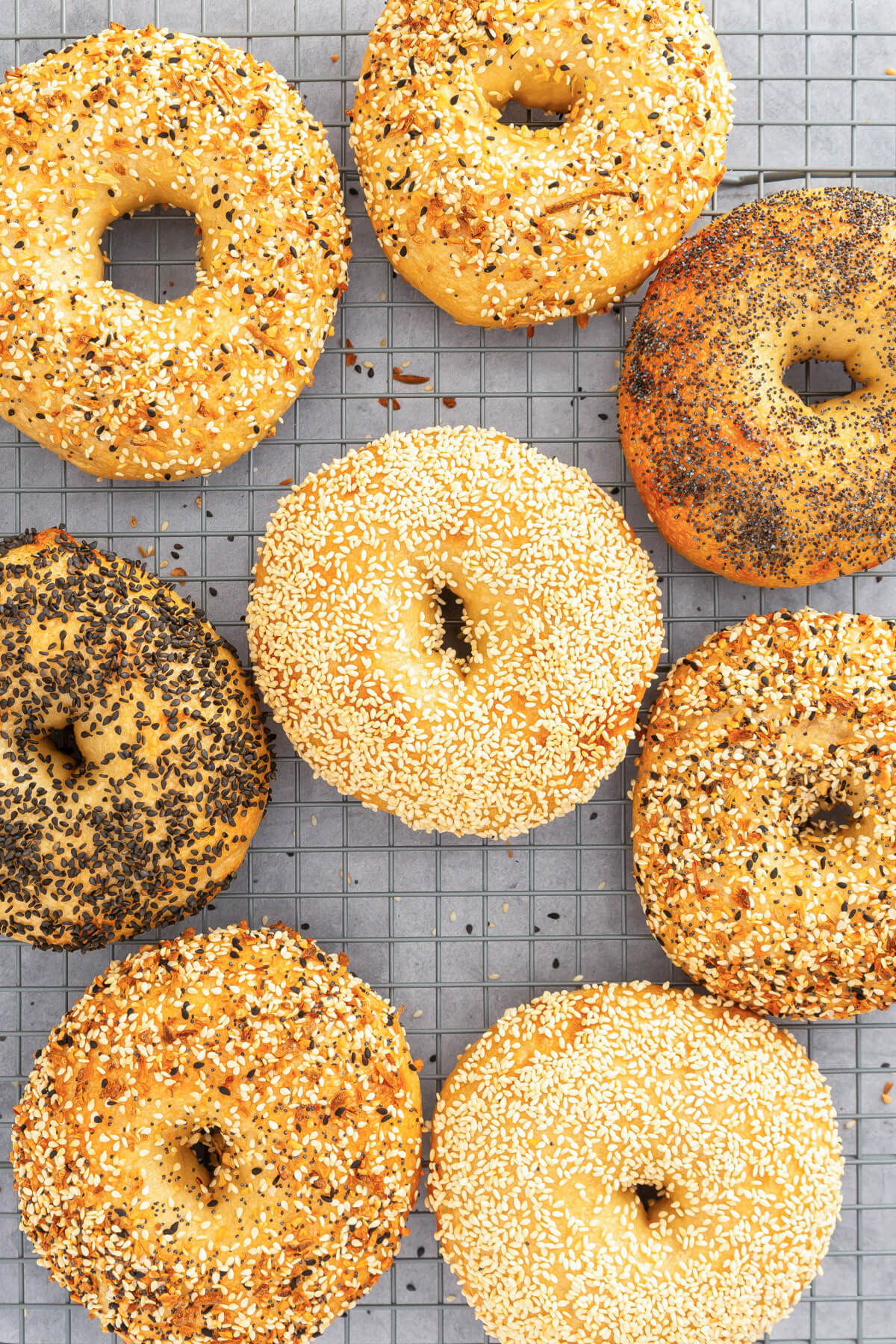
Add toppings immediately, if using then bake on a parchment lined baking sheet for 20 to 25 minutes, rotating the pan halfway through, until the bagels are deep golden brown. Transfer to a rack to cool and repeat with the remaining bagels.
Recipe Variations
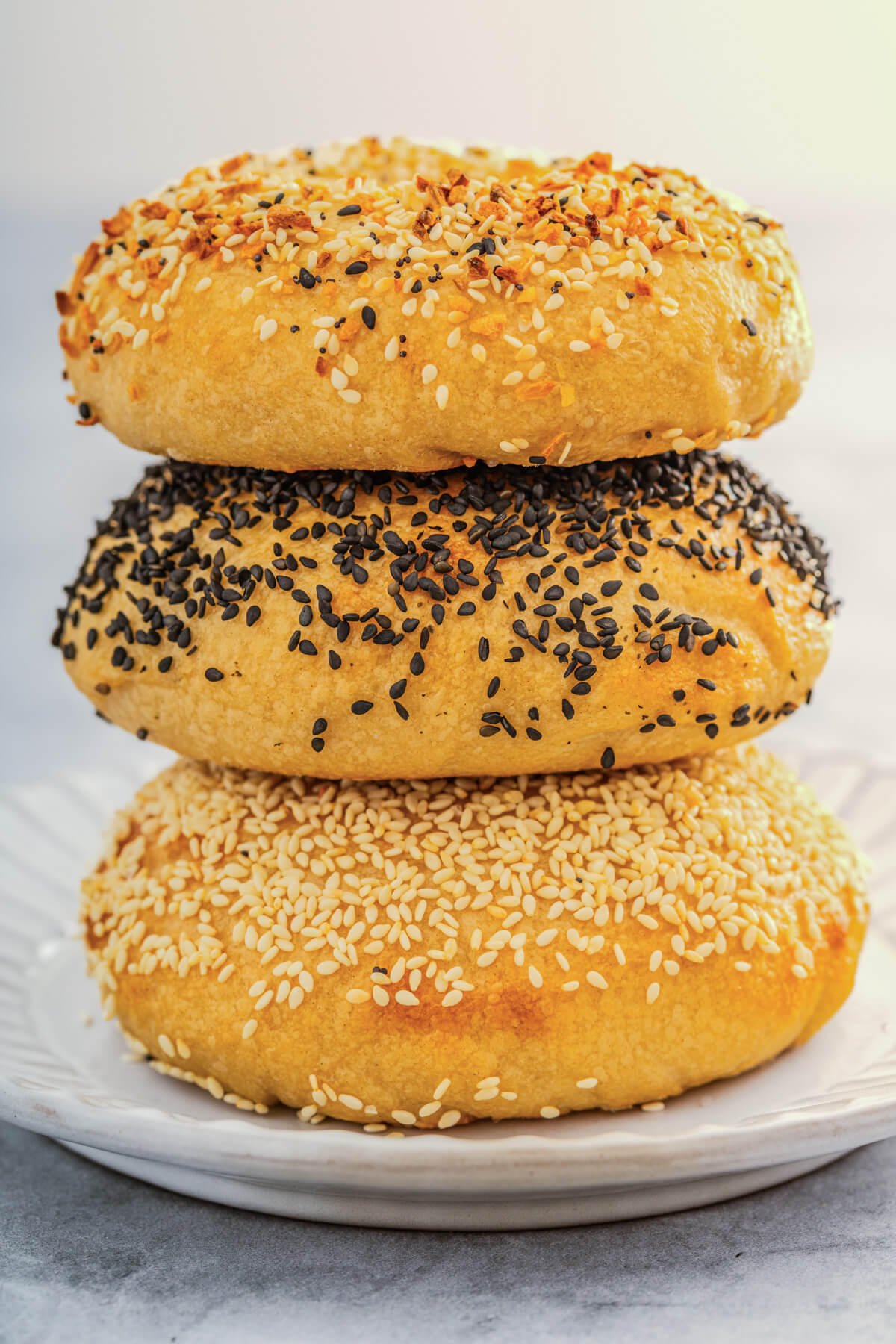
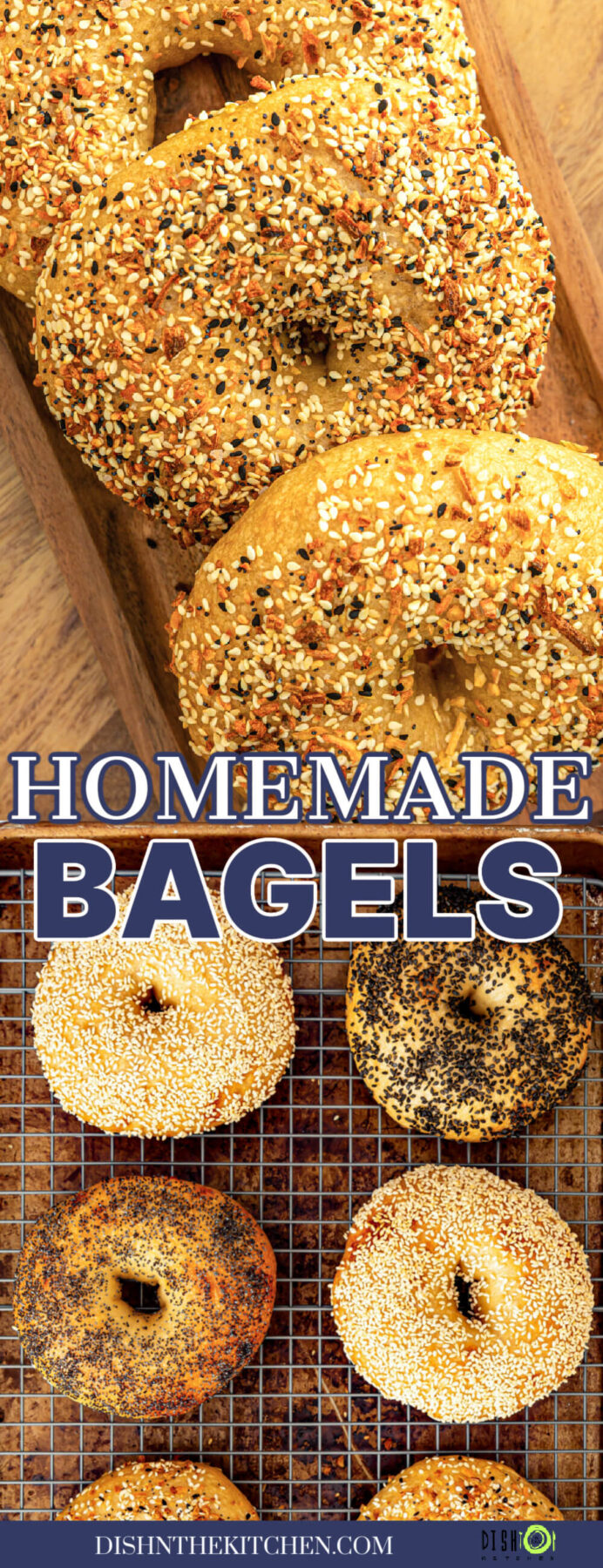
- Add sesame seeds, poppy seeds, everything bagel seasoning, or coarse salt after boiling and before baking.
- For cinnamon-raisin bagels, knead raisins and cinnamon into the dough during the last few minutes of mixing.
- For onion or garlic bagels, add dried minced onion or garlic to the toppings, not the dough.
Recipe Tips and Tricks
- This dough is intentionally stiff. If it feels much softer than expected, resist adding flour right away and give it a few minutes of mixing — the gluten develops slowly.
- The overnight rest isn’t optional if you want classic bagel flavour and texture. Skipping it will give you round bread with holes, not true bagels.
- If your bagels sink immediately in the boil, they may be under-proofed. Let them rest at room temperature for 15–20 minutes before boiling.
Storing Homemade Bagels
Bagels keep well at room temperature for 1 day in a paper bag or loosely covered. For longer storage, slice once cooled and freeze in an airtight container for up to 2 months. Toast straight from frozen.
Avoid refrigerating baked bagels — it dries them out faster than freezing.
Hi! I’m Bernice Hill, the heart and soul behind Dish ‘n’ the Kitchen. It is my pleasure to share easy to follow recipes that are delicious, nutritious, and approachable for the whole family.
If you make this Homemade Bagels recipe, I’d love to hear about it in the comments section or in a recipe rating. Be sure to follow me on Facebook and Pinterest for my latest recipes. Also, if you do make this recipe, please share your photos and tag me on Instagram. I hope you like this recipe!
Homemade Bagels
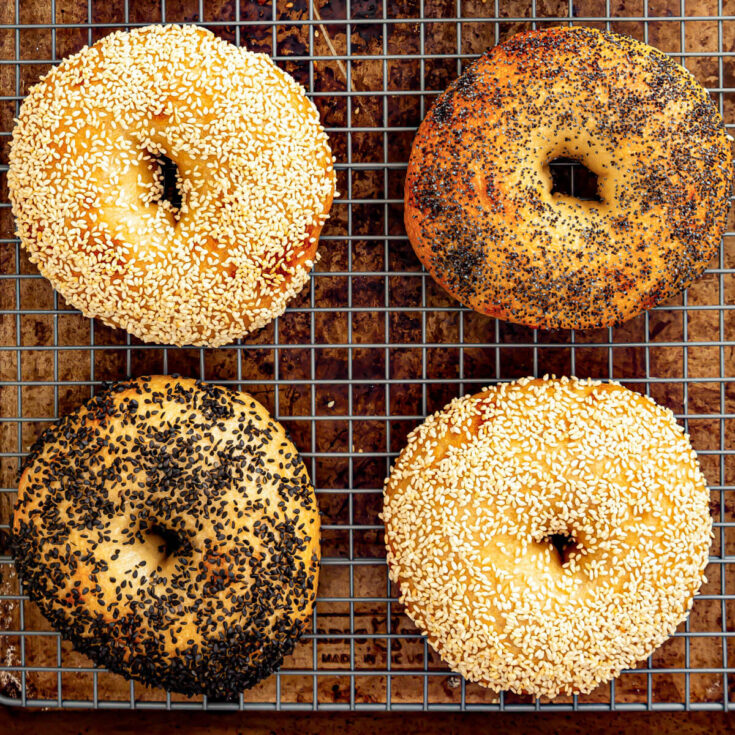
Are you ready for a baking adventure? This Homemade Bagels recipe guides you through mixing, rising, boiling, and baking your own batch of wonderfully chewy and dense, yet tender bagels with a perfectly thin, crisp, and slightly blistered exterior. Choose from an array of toppings or leave them plain and enjoy with a schmear of cream cheese.
Ingredients
PRE-FERMENTATION
- 380 g warm (about 90°F) Water (about 1 cup and 9 tablespoons)
- 20 g Granulated Sugar (about 1½ tablespoons)
- ¾ teaspoon Active Dry Yeast
- 325 g Bread Flour (about 2⅓ cups)
FOR THE DOUGH
- 325 g Bread Flour (about 2⅓ cups)
- 20 g Diastatic Malt Powder (about 2 Tablespoons)
- 10 g Kosher Salt (about 2 teaspoons)
- All of the Sponge
FOR THE BOILING LIQUID
- 2 to 3 quarts Water
- ¼ cup Barley Malt Syrup
- ½ teaspoon Baking Soda
Instructions
MAKE THE SPONGE
- In the bowl of a stand mixer, stir together the warm water, sugar, yeast, and flour with a wooden spoon until smooth.
- Cover the bowl tightly and set it in a warm spot. Let the sponge rise for about 3 hours, until it has tripled in volume and is full of bubbles.
MIX THE DOUGH
- Once the sponge is ready, add the remaining flour and the diastatic malt powder to the bowl.
- Fit the mixer with the dough hook and mix on medium-low speed until a shaggy dough forms.
- Sprinkle in the salt and continue mixing. The dough needs a long knead here — about 20 minutes — to build the structure bagels need. When it’s ready, the dough should be smooth, dense, and elastic.
- Cover the bowl with a damp kitchen towel and let the dough rest for 15 minutes. This short rest makes shaping easier.
DIVIDE AND SHAPE
- Line a baking sheet with parchment and lightly grease it. Weigh the dough and divide it into 130-gram portions. Keep the pieces covered with a damp towel so they don’t dry out.
- Working with one piece at a time, form the dough into a tight ball. Roll it against the counter under a cupped hand until the surface is smooth and the seam is sealed underneath.
- Place the shaped balls back on the baking sheet, cover, and let them rest for 10 minutes.
- Using a damp finger, poke a hole through the center of each dough ball. Gently stretch the opening until the bagel measures about 4 inches across, with a hole roughly 1½ inches wide. The hole should look a little oversized — it will shrink as the bagels rise and bake.
OVERNIGHT REST
Cover the baking sheet with plastic wrap and refrigerate the bagels overnight. This cold fermentation is key to both flavour and texture.
BOILING THE BAGELS
- Preheat the oven to 425°F. Fill a large pot or Dutch oven with at least 3 inches of water.
- Stir in the barley malt syrup and bring to a full boil. Add the baking soda* and stir well.
- Working in batches of 3 to 4, boil the bagels for 1 minute per side. Lift them out, let excess water drip off, and transfer to a parchment-lined baking sheet. Try not to boil more bagels than you can bake right away.
- Add toppings immediately, if using.
BAKE THE BAGELS
Bake for 20 to 25 minutes, rotating the pan halfway through, until the bagels are deeply golden. Transfer to a rack to cool and repeat with the remaining bagels.
Notes
*Use extreme CAUTION when adding baking soda to the boiling water, make sure your pot has plenty of headroom. The water will bubble up aggressively for a moment, and a pot that’s too full can easily boil over. A wide, deep pot or Dutch oven works best.
TO MAKE BAGELS SAME DAY (WITHOUT OVERNIGHT COLD RISE)
Make the sponge - In the bowl of a stand mixer, stir together the warm water, sugar, yeast, and flour until smooth. Cover and let rest in a warm spot until doubled and bubbly, about 60–90 minutes.
Mix the dough
Add the remaining flour and the diastatic malt powder to the sponge. Using thedough hook, mix on medium-low speed until the dough begins to come together. Add the salt and continue mixing for 15–20 minutes, until the dough is smooth, dense, and elastic.
Rest
Cover the bowl with a damp towel and let the dough rest for 15 minutes.
Divide and pre-shape
Line a baking sheet with parchment and lightly grease it. Divide the dough into 130 g portions. Keep covered while working. Shape each portion into a tight ball by rolling it against the counter under a cupped hand until smooth.
Short rest
Cover the dough balls and let rest at room temperature for 10 minutes.
Shape the bagels
Poke a hole through the center of each dough ball with a damp finger. Gently stretch into a bagel about 4 inches across, with a hole roughly 1½ inches wide.
Cold rest
Transfer the shaped bagels to the baking sheet, cover loosely with plastic wrap, and refrigerate for 2–3 hours. They should feel slightly firmer and more developed, but not fully proofed.
Finish proofing
Remove the bagels from the refrigerator and let stand at room temperature for 30–45 minutes, until slightly puffy but still dense.
Boil
Preheat the oven to 425°F. Bring the water to a full boil in a large pot. Stir in the barley malt syrup, then add the baking soda and stir well.
Boil the bagels in batches of 3–4 for 1 minute per side. Remove, let excess water drip off, and place on a parchment-lined baking sheet. Add toppings immediately, if using.
Bake
Bake for 20–25 minutes, rotating the pan halfway through, until deeply golden. Transfer to a rack to cool before slicing.
Nutrition Information:
Yield:
10Serving Size:
1Amount Per Serving: Calories: 270Total Fat: 1gSaturated Fat: 0gUnsaturated Fat: 1gSodium: 479mgCarbohydrates: 56gFiber: 2gSugar: 8gProtein: 8g
Nutritional calculation was provided by Nutritionix and is an estimation only. For special diets or medical issues please use your preferred calculator.