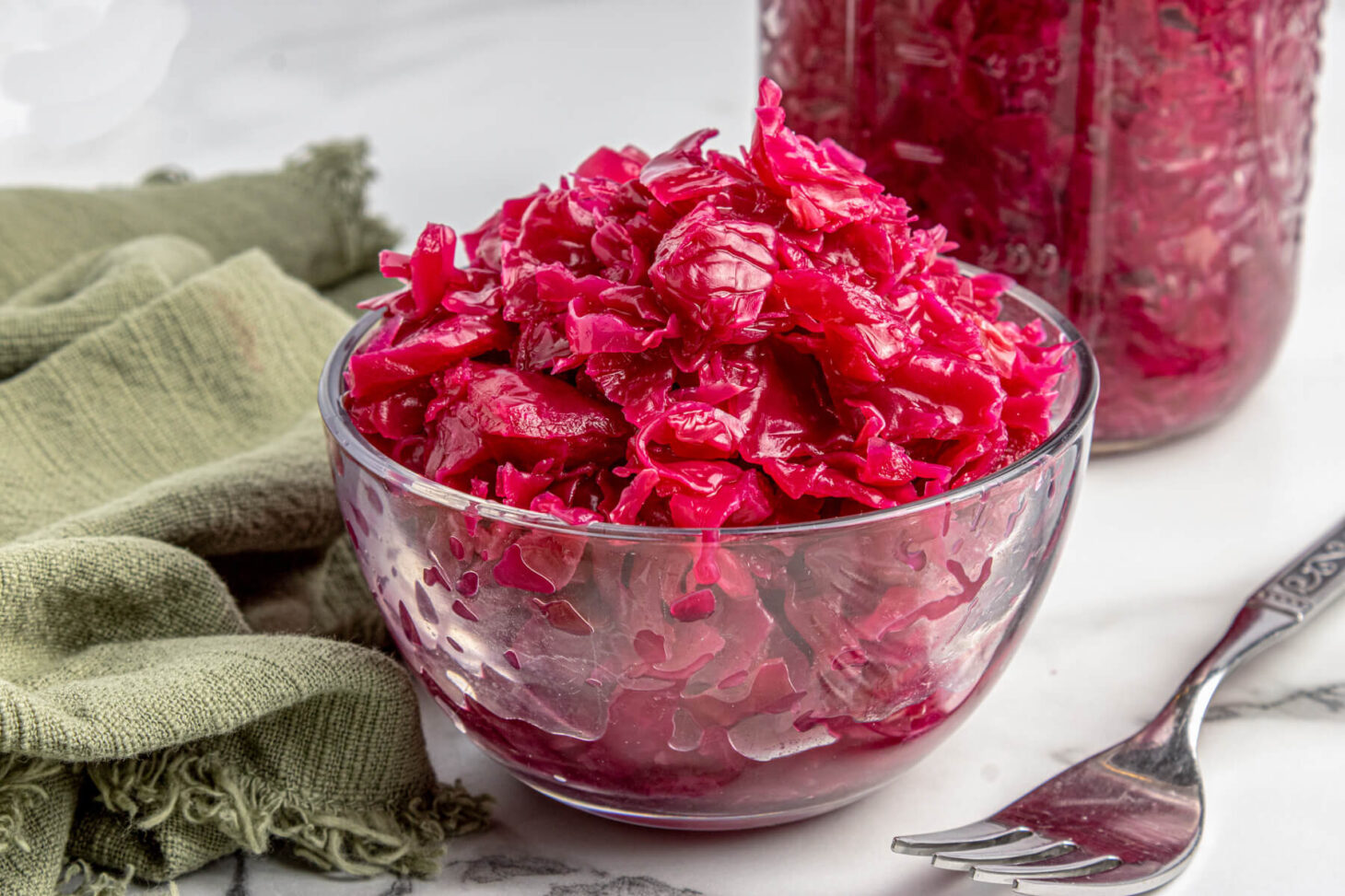
Red Cabbage Sauerkraut is an easy, flavourful, and healthy probiotic side dish. Made with very few ingredients, this naturally fermented sauerkraut recipe is made by massaging salted cabbage with grated apple, packing it into a glass jar, and fermenting it for 7 days to 3 weeks. No special equipment needed.
Today I am thrilled to share another of my delicious, authentic German cabbage recipes with you! I love Rotkohl, or braised German red cabbage alongside my Rinderrouladen and no bratwurst is complete without spicy mustard and Sauerkraut.
Want to save this recipe?
Enter your email below and get this post sent straight to your inbox. Plus, I’ll send you my weekly newsletter featuring the newest and best Dish ‘n’ the Kitchen recipes every week!
Red Cabbage Sauerkraut
There’s something incredibly satisfying about the rhythmic crunch of a knife through a fresh head of cabbage and the simple alchemy of salt and time. While green cabbage is the traditional go-to for fermentation, its vibrant purple cousin brings a stunning, jewel-toned flair that is hard to resist.
Red Cabbage Sauerkraut isn’t just a feast for the eyes; it offers a deeper, slightly earthier flavour profile that mellows beautifully as it cultures. Whether you are a seasoned fermenter or a curious beginner looking to harness the power of beneficial bacteria, this recipe is a masterclass in patience and reward. It’s the perfect crunchy, tangy topper for everything from your morning avocado toast to hearty evening braises.
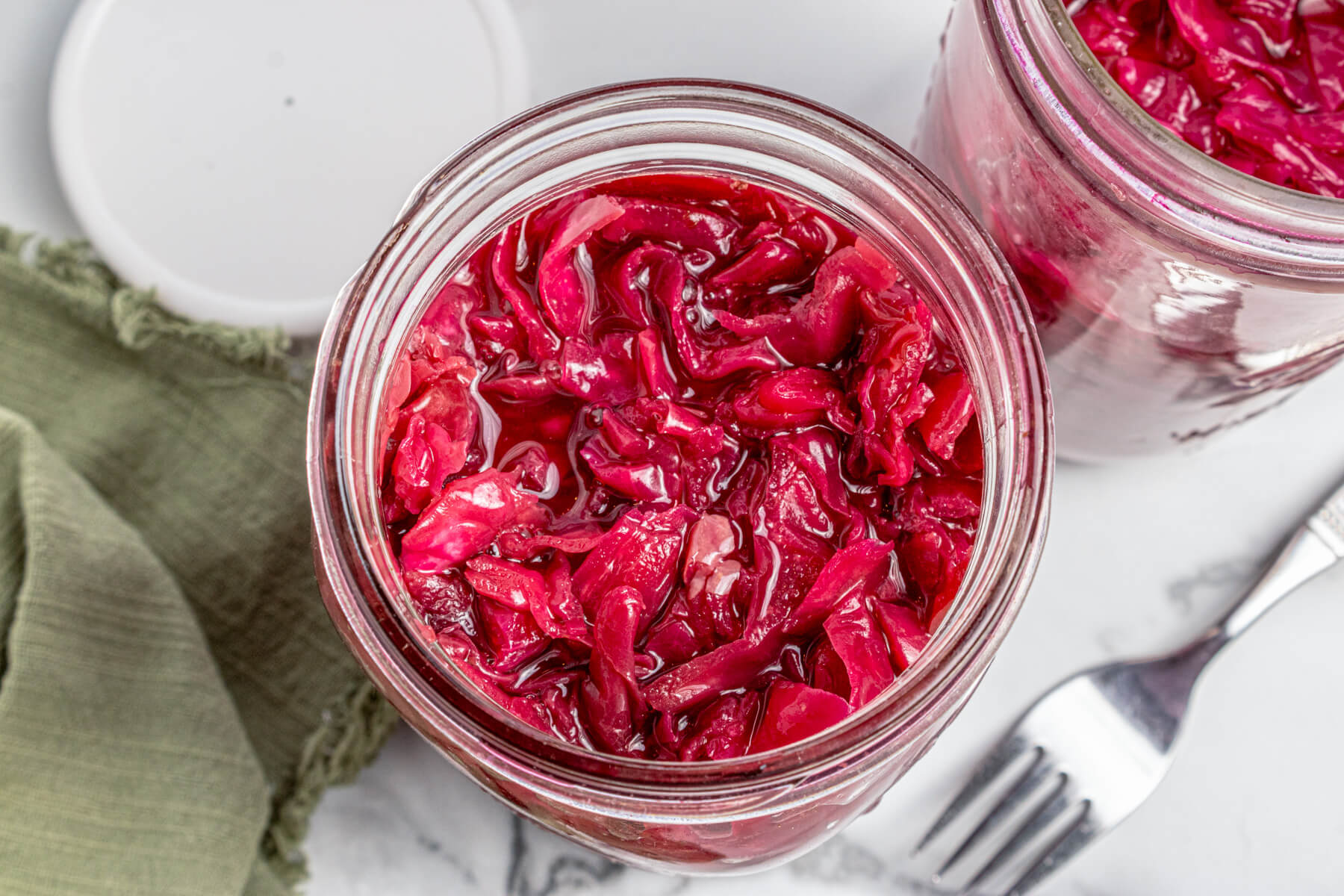
Even though I grew up making sauerkraut in a large 20 L crock, I never realized the health benefits of fermented foods until much later. Red cabbage sauerkraut is often hailed as a “superfood” because it combines the inherent nutritional profile of red cabbage with the biological enhancements that occur during the fermentation process.
When you ferment red cabbage, you aren’t just preserving it; you are transforming it into a more bioavailable and nutrient-dense version of itself.
Key Health Benefits of Red Cabbage Sauerkraut
NOTE: To reap the following benefits, the sauerkraut must be raw and unpasteurized. High-heat canning or commercial shelf-stable jars often kill the live probiotics that make sauerkraut so beneficial.
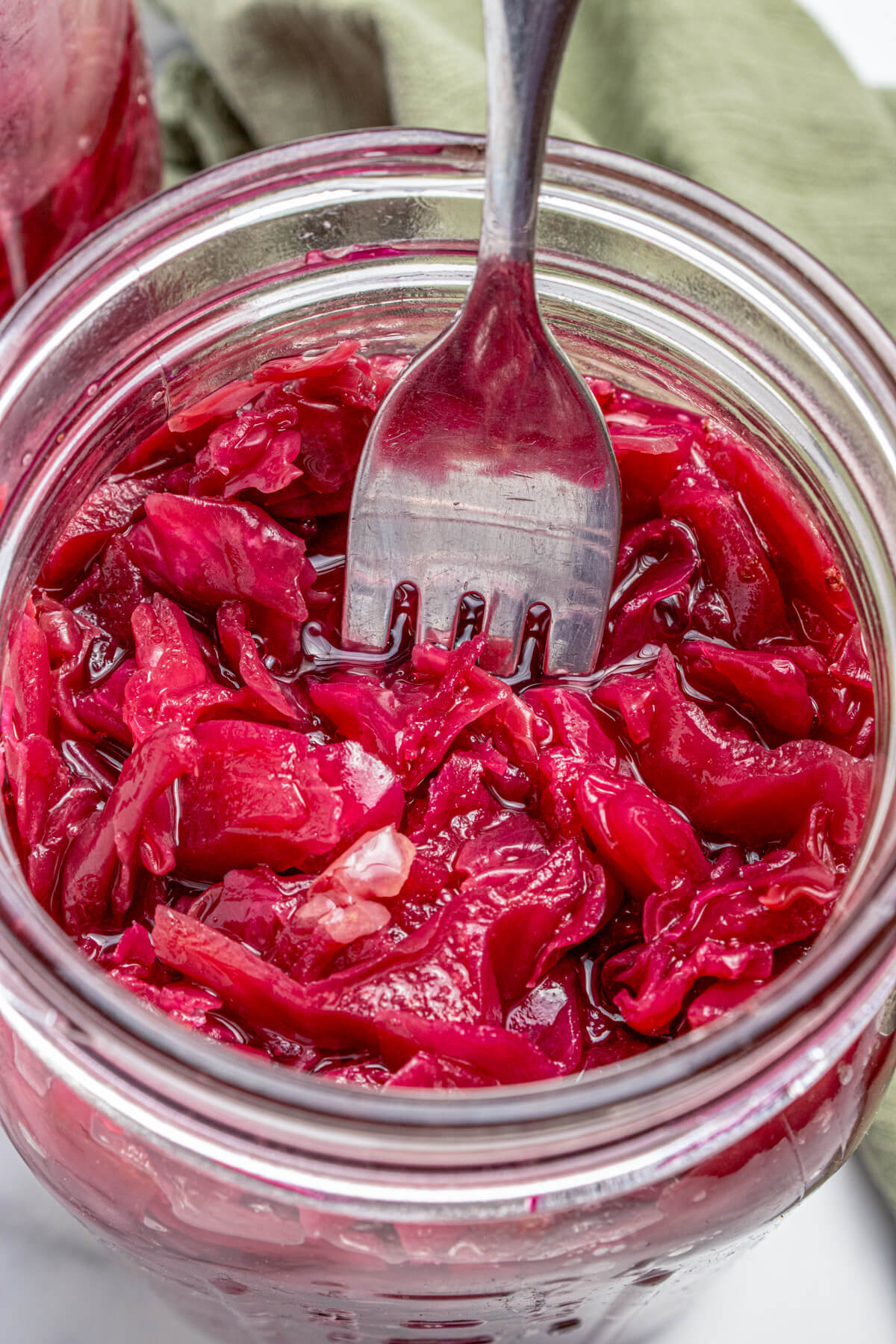
- Probiotic Powerhouse: The fermentation process creates trillions of Lactobacillus bacteria. These beneficial microbes support a healthy gut microbiome, which is linked to improved digestion, stronger immunity, and even better mental clarity.
- Enhanced Vitamin C: Red cabbage naturally contains significantly more Vitamin C than green cabbage (Just a half-cup contains about 45% of the daily recommended amount of vitamin C). Fermentation makes this vitamin more stable and easier for your body to absorb, making it an excellent booster for your immune system.
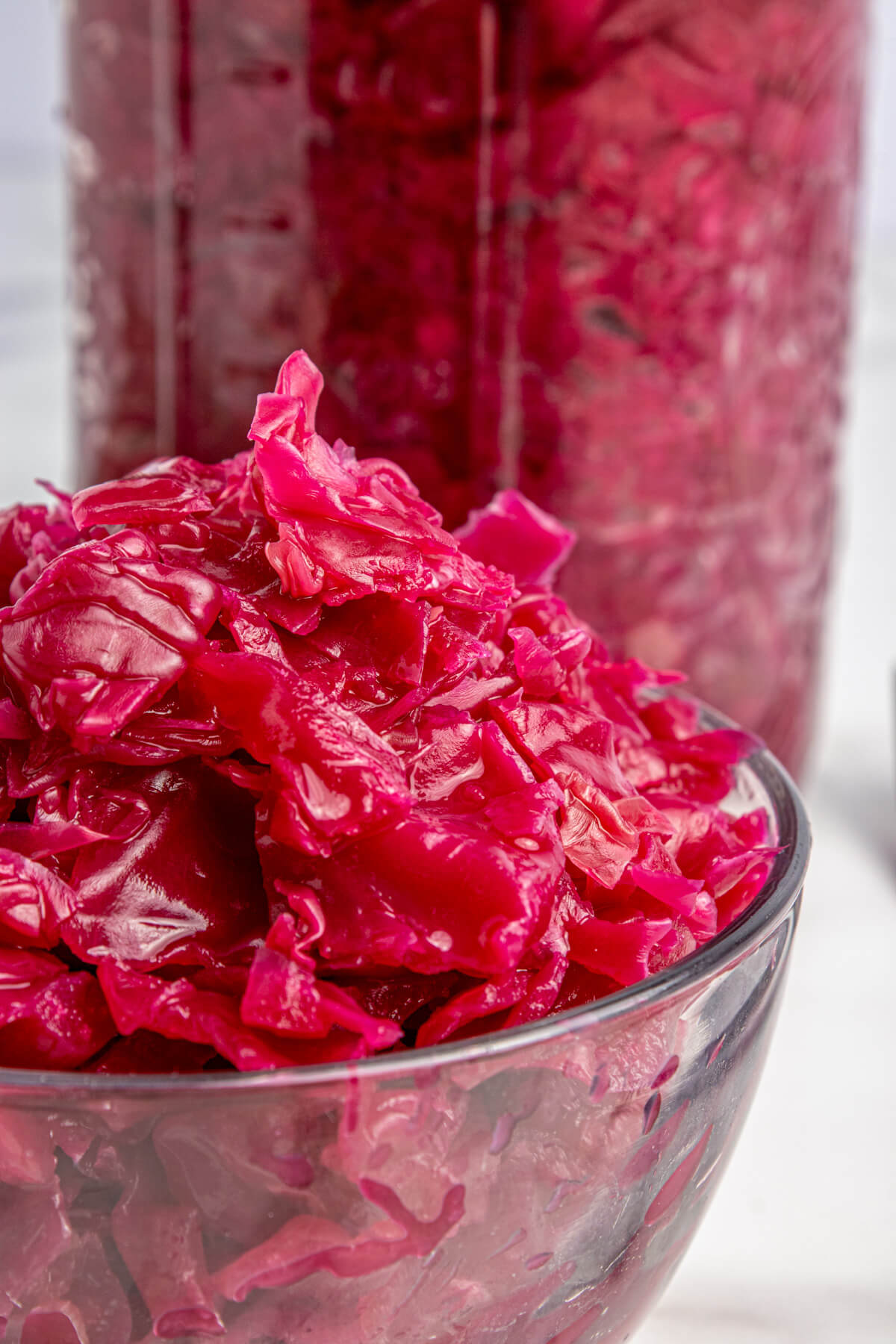
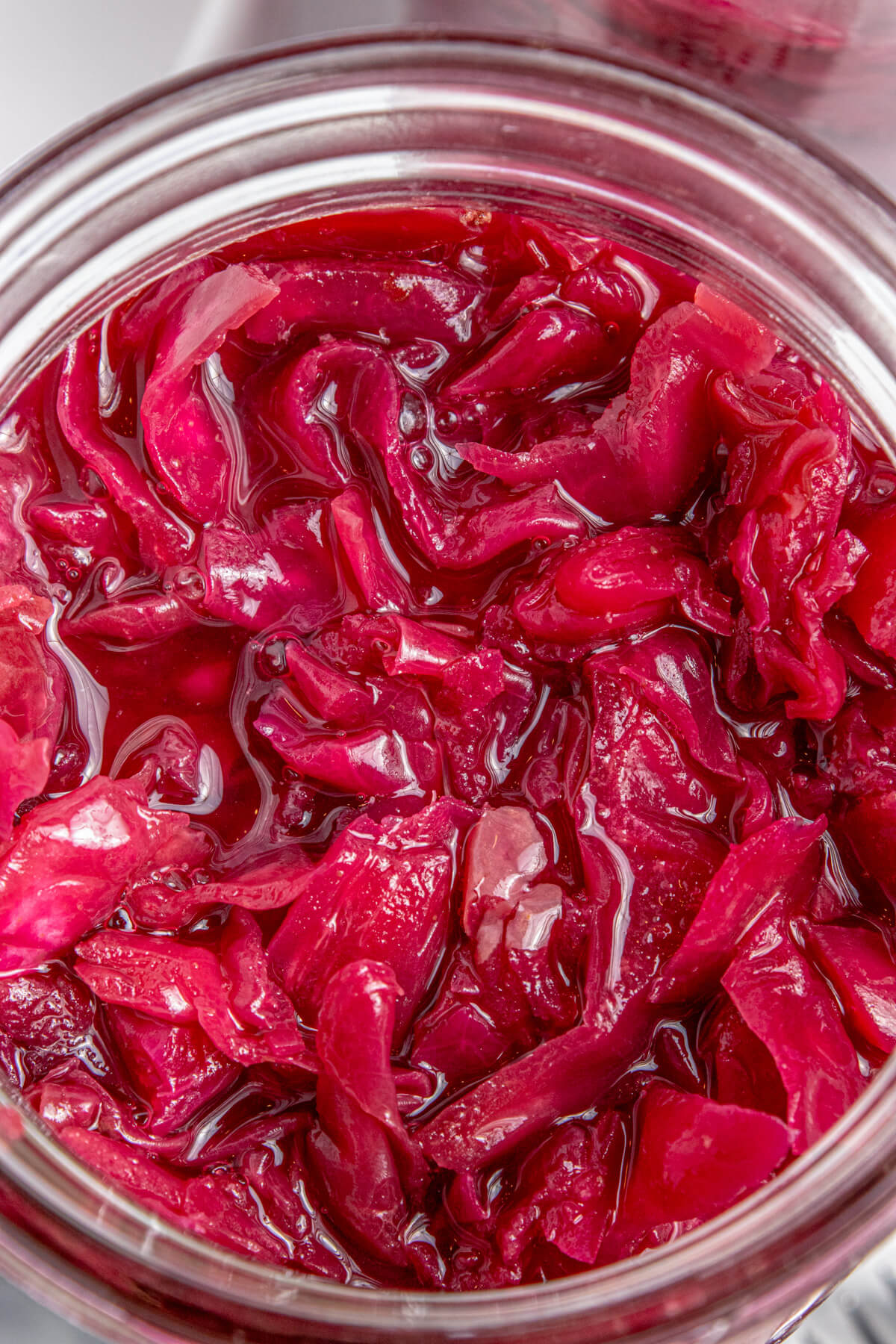
- Rich in Anthocyanins: That deep purple hue comes from anthocyanins—powerful antioxidants that help combat oxidative stress and inflammation in the body. It’s the anthocyanins that change colour from purple to bright fuchsia during fermentation.
- Vitamin K2 Production: While raw cabbage is a source of Vitamin K1, the fermentation process produces Vitamin K2. This specific form of the vitamin is crucial for directing calcium to the bones and teeth and away from the arteries.
- Digestive Enzymes: Raw, unpasteurized sauerkraut contains active enzymes that help your body break down other foods more efficiently, reducing bloating and improving overall nutrient uptake.
- It’s Naturally Gluten Free.
Ingredients in Red Cabbage Sauerkraut
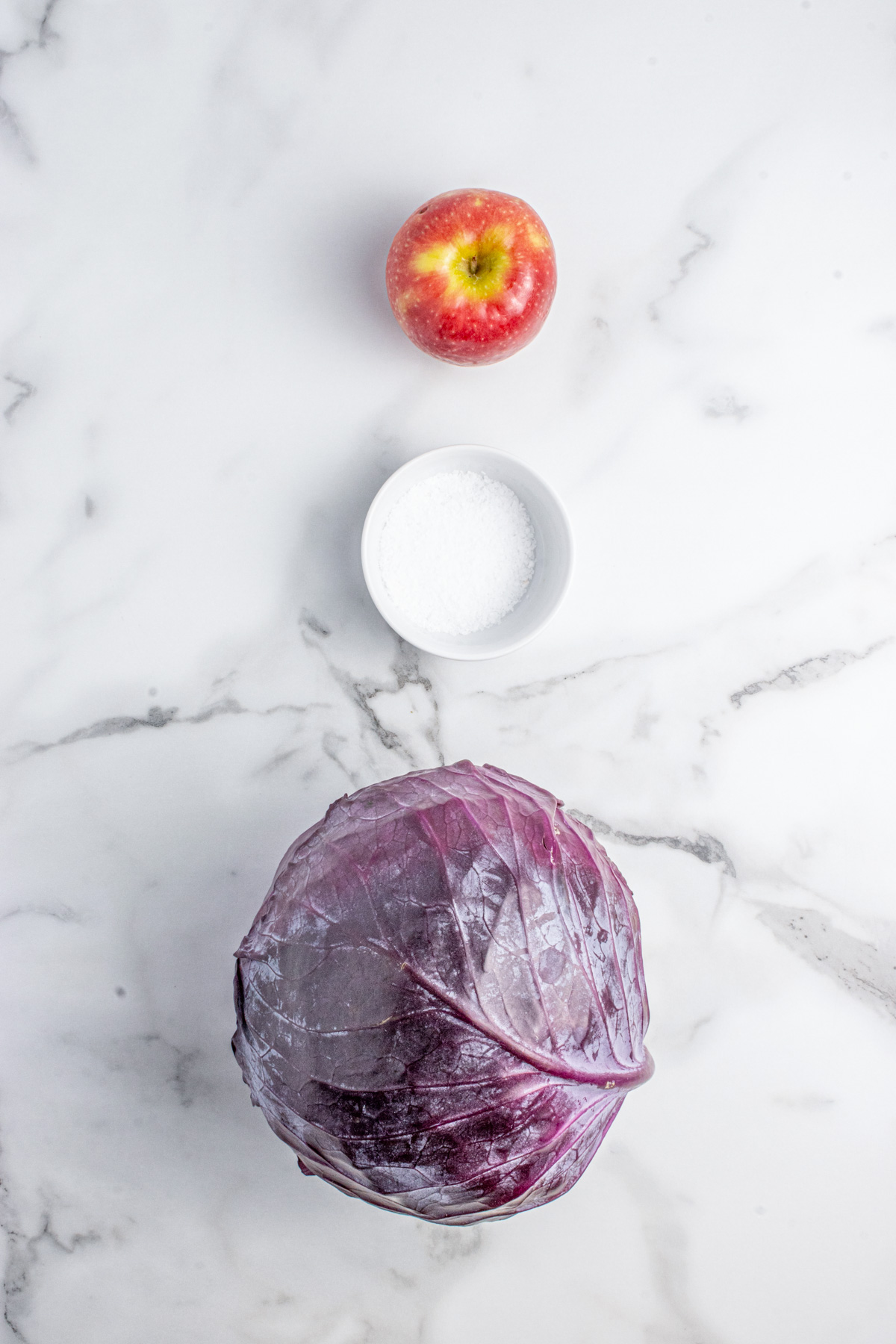
The ingredients list couldn’t be simpler: A head of red cabbage with the outer leaves removed and core removed, a grated apple for a touch of sweetness, and salt. However, there are two more intangible ingredients in homemade sauerkraut.
Lactobacillus bacteria occur naturally on the cabbage and in your body. Through time, it transforms vegetable matter like raw cabbage into sauerkraut by turning natural sugars in the cabbage into lactic acid, hence the sour flavour.
Red Cabbage: Its firm leaves hold up well during fermentation, and its natural sugars feed the lactic acid bacteria that develop the tangy flavor. You can substitute it with a green cabbage if red isn’t available.
Apple (Grated): The apple contributes a gentle sweetness and additional fermentable sugars which help kickstart and sustain healthy bacterial activity. Use any crisp apple variety (Fuji, Gala, Honeycrisp).
Kosher Salt: Salt is critical for fermentation. It draws moisture out of the cabbage to create brine and helps ensure that only the good bacteria thrive in the jar. Do not use table salt with iodine or anti-caking additives. These can interfere with fermentation. Pickling salt or sea salt are great alternatives.
Feel free to experiment with additional flavourings like juniper berries, caraway seeds, fennel seeds, sliced hot peppers, shredded beets or carrots, garlic, or fresh ginger. Using extra ingredients may affect the salt ratio so be sure to factor those into the total weight before adding salt.
How to Make Fermented Red Sauerkraut
To ensure your sauerkraut stays crunchy rather than soft, it is essential to maintain a consistent salt ratio. A standard rule of thumb is 2% salt by weight. If your cabbage weighs 1000 g, you would calculate the salt as follows: 1000 g x 0.02 = 20 g of salt.
Using a kitchen scale ensures that the environment is salty enough to keep spoilage bacteria at bay while allowing the Lactobacillus to thrive. You will also need one or two glass mason jars with plastic lids. I have a hole outfitted with rubber grommets drilled into my jar lids so that I can insert an airlock. This allows the fermentation gasses to escape yet prevents air from getting into the ferment.
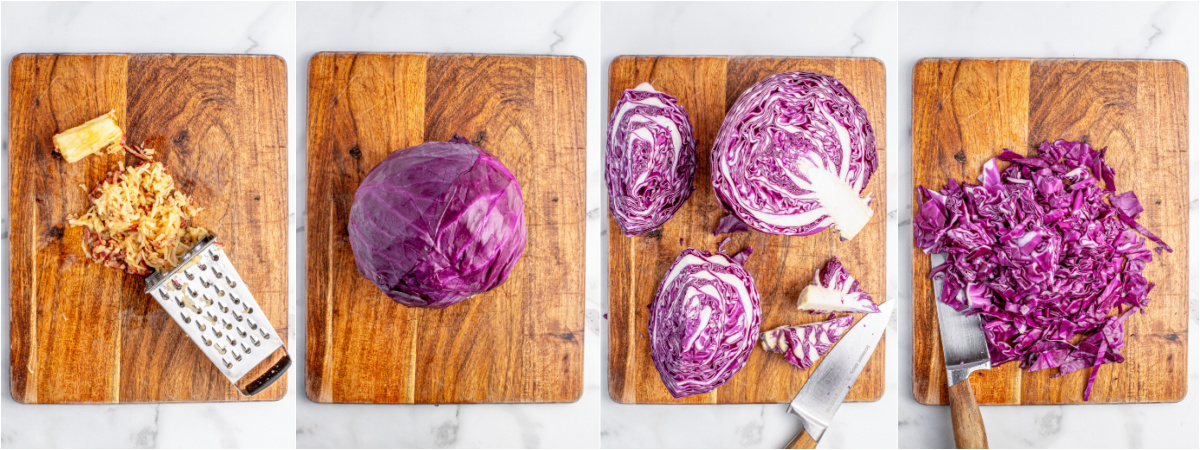
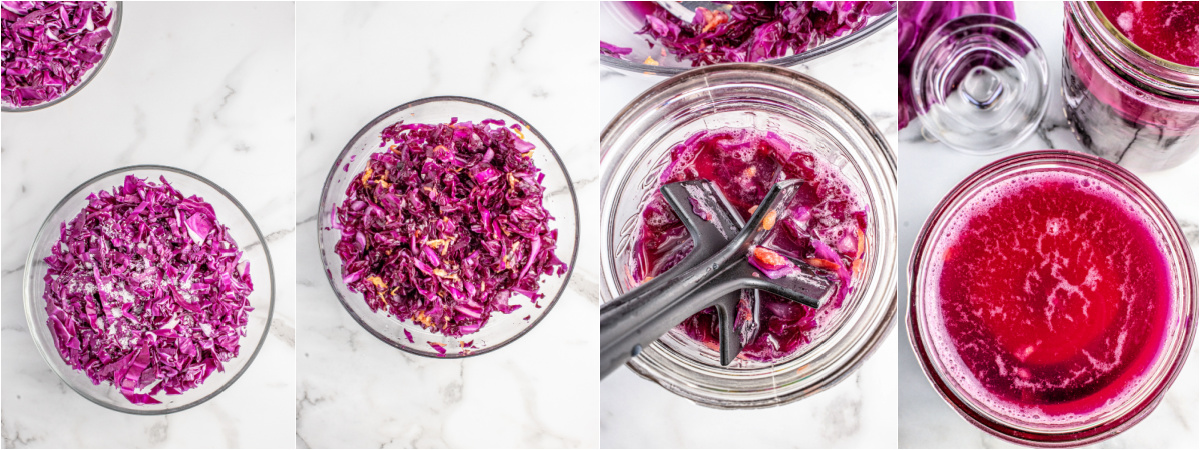
Let’s make some kraut! To begin, peel off outer cabbage leaves and set them aside. Cut the purple cabbage in half, then quarters. Remove the core and slice the quarters into thin strips. Place the sliced cabbage in a large bowl and add the salt and toss to combine.
Let it sit for 5–10 minutes until it starts to sweat. Using clean hands, massage and squeeze the cabbage for about 5–10 minutes. It will soften, release liquid, and shrink in size. This is what you want. Grate the apple and mix it into the cabbage.
For the Fermentation
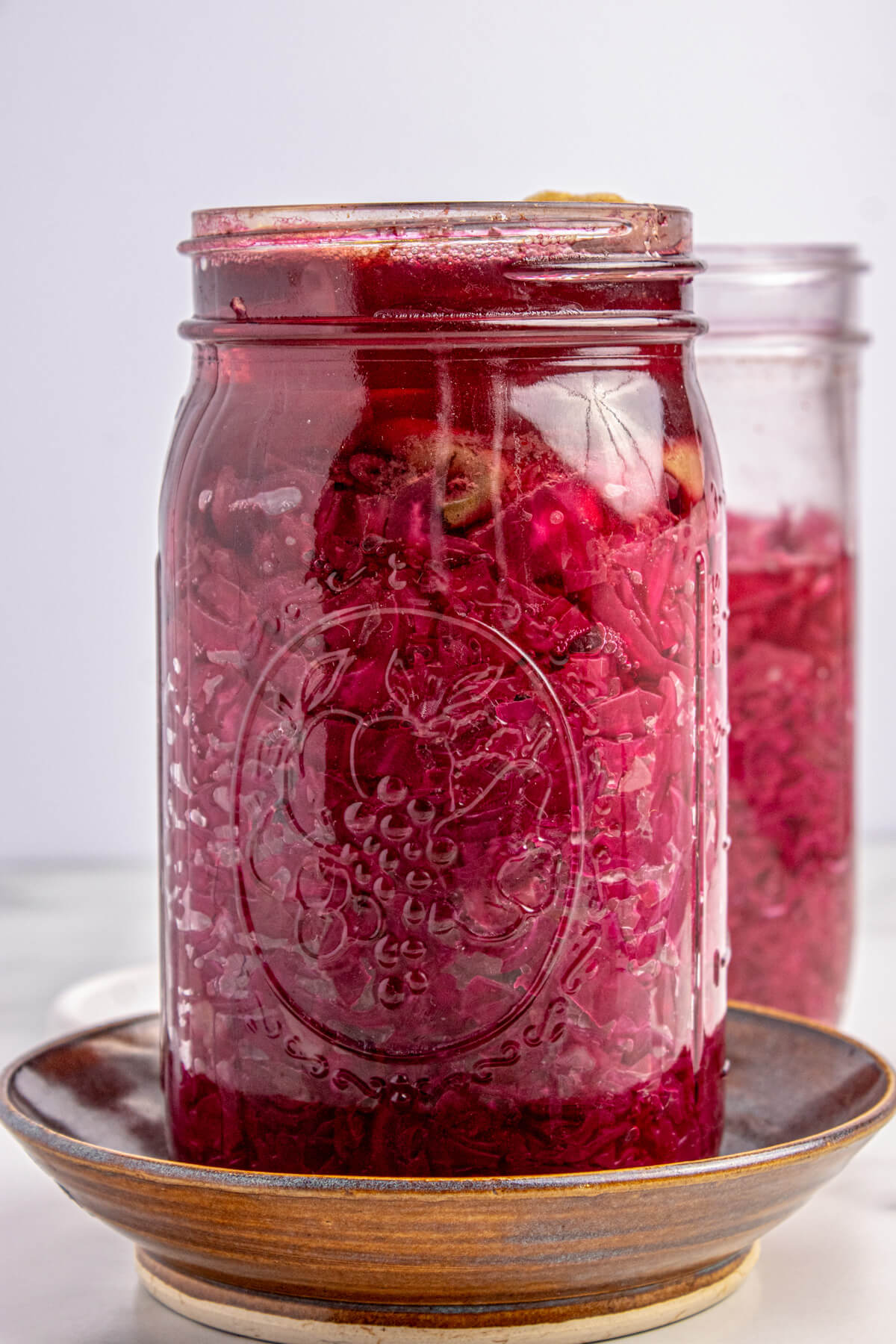
Add a little cabbage to the jar and press it down firmly. Keep adding and pressing until all the cabbage is packed in. The liquid should rise above the cabbage.
Next, place a reserved cabbage leaf on top then add a glass weight (or clean rock or small jar) on top of the leaf so the cabbage stays under the liquid.
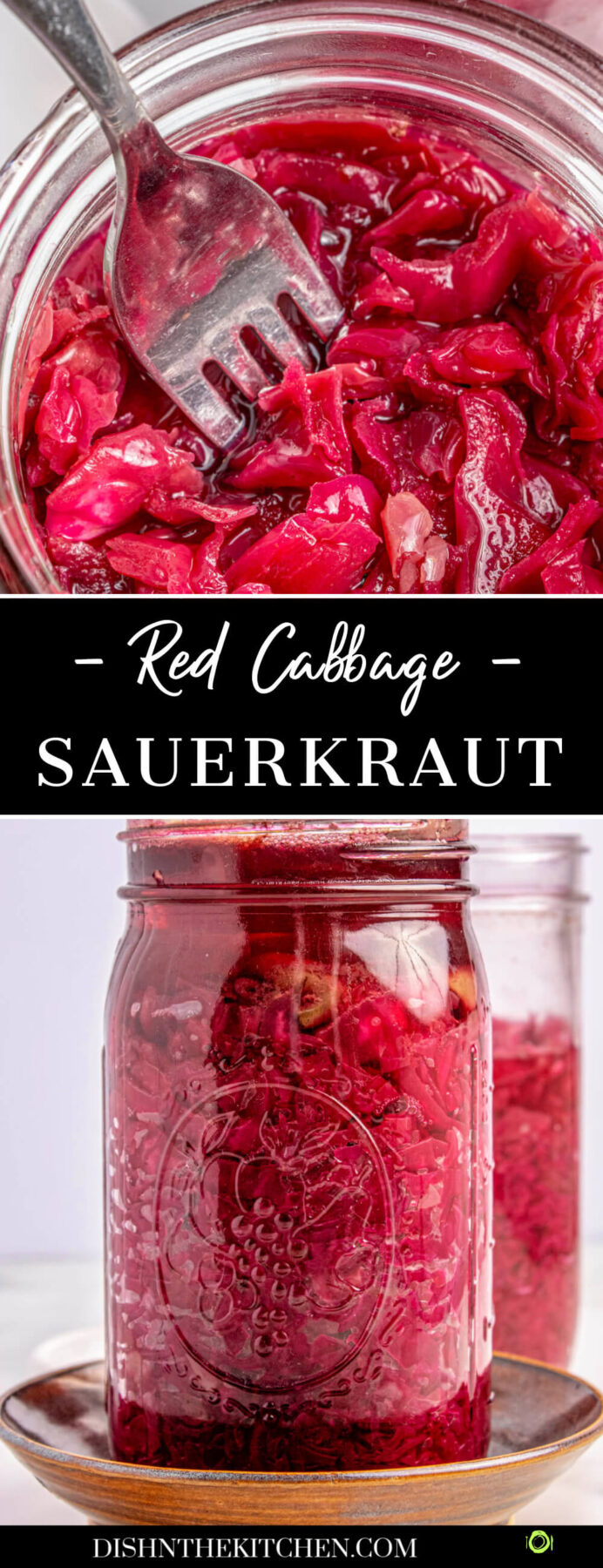
Loosely cover and place the jar on a plate and set it somewhere out of direct sunlight at room temperature (65–75°F or 18–24°C is ideal). Let it ferment: 7 days for mild 2–3 weeks for best flavour. Check it daily to make sure the cabbage stays under the liquid.
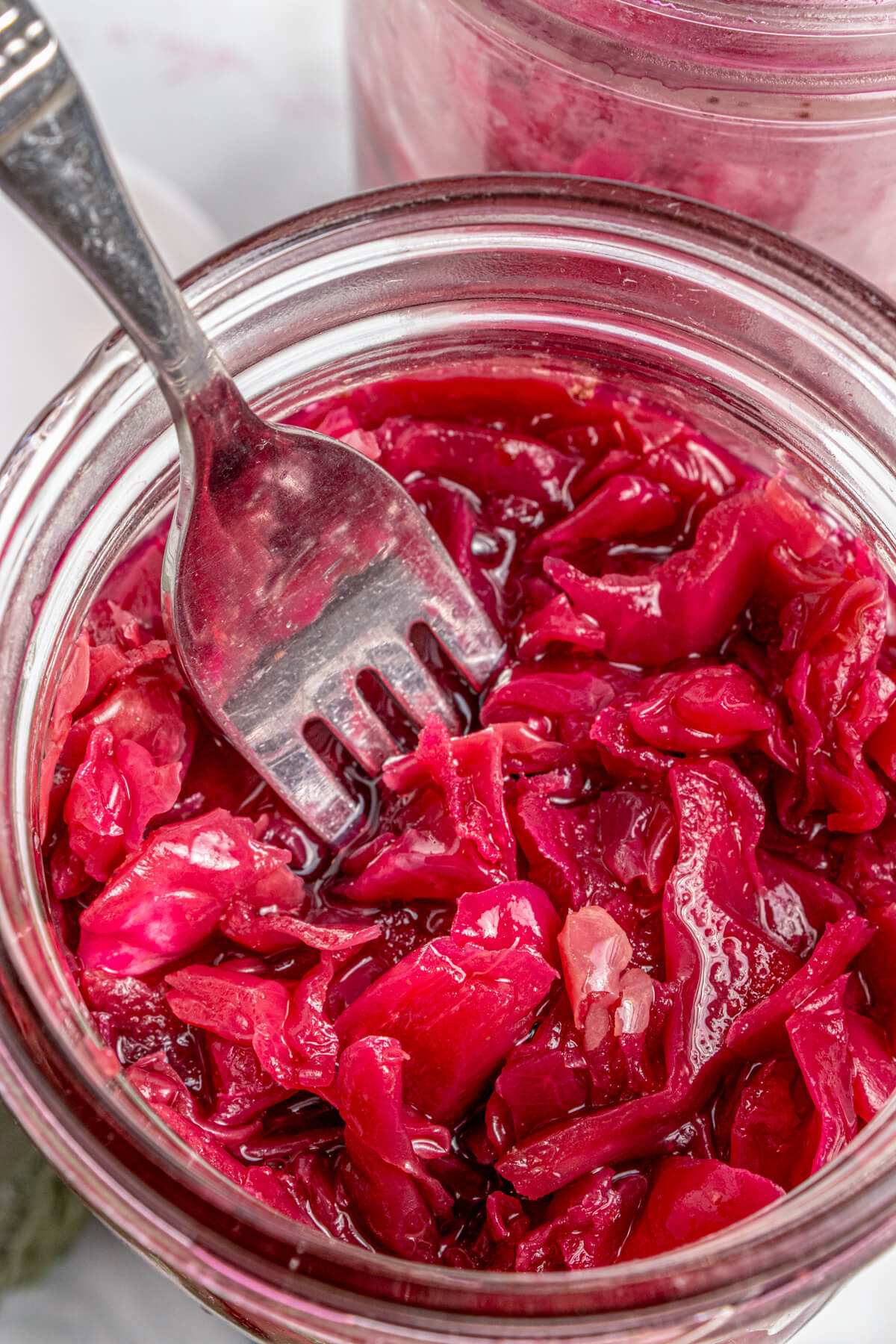
Taste at one week, then every few days until it reaches your ideal fermented flavour. Remove cabbage leaf and the weight, cover it with a lid, and refrigerate. Use this sauerkraut as a side, a topping for burgers, in salads, or even as a probiotic-rich snack.
Frequently Asked Questions
- Why is salt so important in this recipe? Salt draws out the cabbage’s moisture to create brine and ensures that beneficial lactobacilli inside it thrive while unwanted microbes are suppressed.
- What if I see mold? If you see colored or fuzzy mold, throw out the batch and start again.
- My sauerkraut smells strong, is it bad? Fermentation smells can be sharp; if there’s no foul odor, sliminess, or mold, it’s usually fine.
- Can kids eat this? Yes, it’s a probiotic food, but start with small amounts if they’re new to fermented foods.
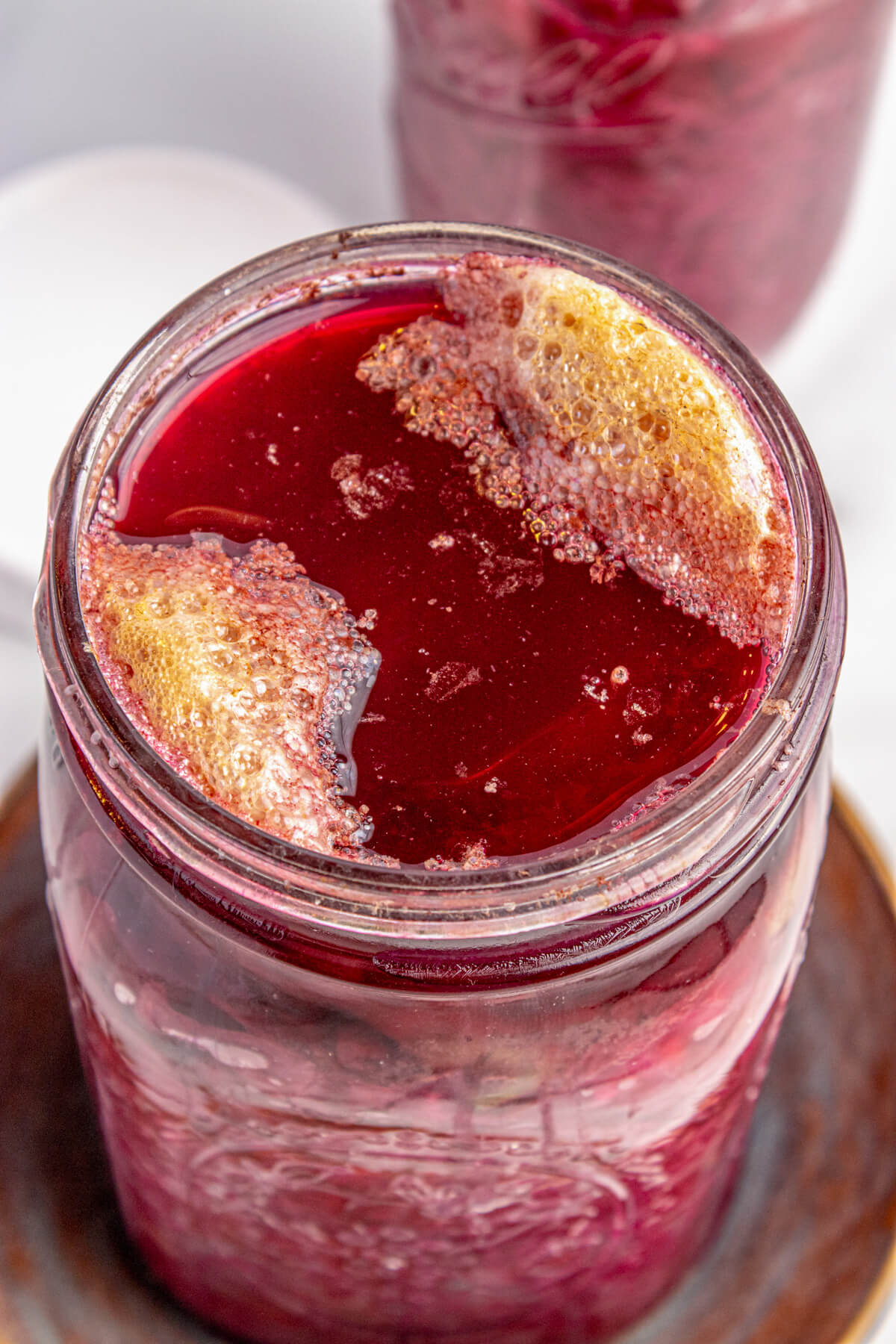
- What are the bubbles at the top of the jar? Bubbles are normal and mean fermentation is active. They’re carbon dioxide produced by the lactic acid bacteria breaking down sugars in the cabbage. If you see bubbles, your sauerkraut is doing exactly what it should.
Recipe Tips and Tricks
- Room Temperature Matters: Ideal fermentation happens around 65–75°F (18–24°C). Cooler temperatures slow fermentation: warmer temperatures can lead to spoiling.
- Keep Everything Clean: Sterilize your jars and equipment so that good bacteria can flourish without competition from unwanted microbes. I typically run them through the dishwasher or hand wash them thoroughly with soap and warm water.
- Submerge Fully: Always keep your cabbage under the brine. Doing this prevents mold from growing. Use weights or cabbage leaves to ensure that the cabbage is fully covered.
- Create Extra Brine If Needed: If your cabbage doesn’t release enough brine, make a simple brine (1 tsp salt per cup water) to top up and ensure submersion.
Storage & Shelf Life
Refrigeration: Once it reaches your desired tanginess (often 7–21 days), remove the weights and seal the jar with a lid. Refrigerating slows fermentation, and the sauerkraut will remain good for 3–6 months, gradually increasing in sourness and losing a bit of crunch.
Hi! I’m Bernice Hill, the heart and soul behind Dish ‘n’ the Kitchen. It is my pleasure to share easy to follow recipes that are delicious, nutritious, and approachable for the whole family.
If you make this Red Cabbage Sauerkraut recipe, I’d love to hear about it in the comments section or in a recipe rating. Be sure to follow me on Facebook and Pinterest for my latest recipes. Also, if you do make this recipe, please share your photos and tag me on Instagram. I hope you like this recipe!
Red Cabbage Sauerkraut
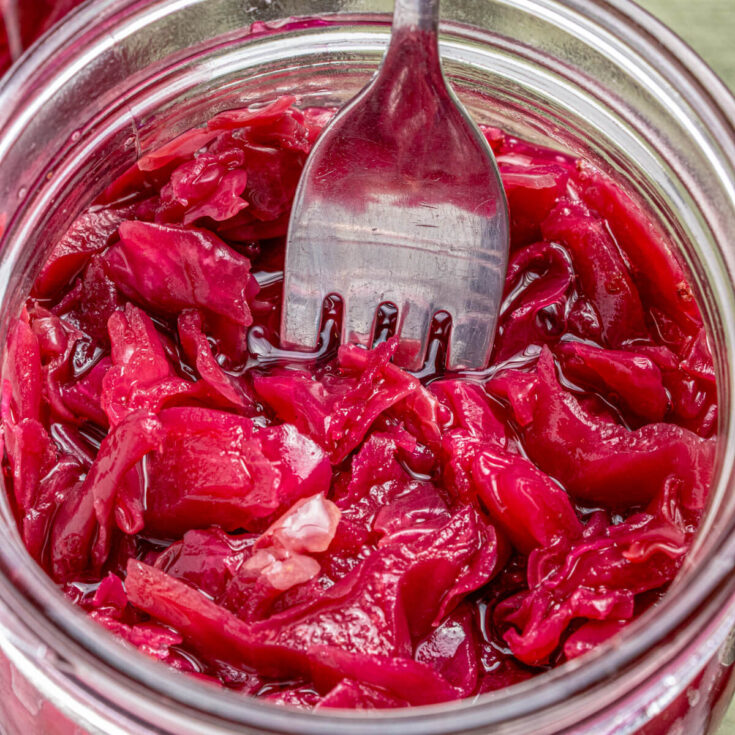
Red Cabbage Sauerkraut is an easy, flavourful, and healthy probiotic side dish. Made with very few ingredients, this naturally fermented sauerkraut recipe is made by massaging salted cabbage with grated apple, packing it into a jar, and fermenting it for 7 days to 3 weeks. No special equipment needed.
Ingredients
- 2.2 lb (1 kg) Red Cabbage; whole
- Red Apple; grated with skin on
- 5 teaspoons (20 g) fine Kosher Salt
Instructions
PREPARE THE CABBAGE
- Peel off 2 outer cabbage leaves and set them aside. Cut the cabbage in half, then quarters. Remove the core and slice the quarters into thin strips.
- Place the sliced cabbage in a large bowl and add the salt and toss to combine. Let it sit for 5–10 minutes until it starts to sweat.
- Using clean hands, massage and squeeze the cabbage for about 5–10 minutes. It will soften, release liquid, and shrink in size. This is what you want.
- Grate the apple and mix it into the cabbage.
FOR THE FERMENTATION
- Place a little cabbage to the jar and press it down firmly. Keep adding and pressing until all the cabbage is packed in. The liquid should rise above the cabbage.
- Place a reserved cabbage leaf on top. Next, add a glass weight (or clean rock or small jar) on top of the leaf so the cabbage stays under the liquid.
- Loosely cover and place the jar on a plate and set it somewhere out of direct sunlight at room temperature (65–75°F or 18–24°C is ideal). Let it ferment: 7 days for mild 2–3 weeks for best flavour. Check it daily to make sure the cabbage stays under the liquid.
- Taste at one week, then every few days until it reaches your ideal fermented flavour. Remove cabbage leaf and the weight, cover it with a lid, and refrigerate.
Nutrition Information:
Yield:
8Serving Size:
1/4 cupAmount Per Serving: Calories: 12Total Fat: 0gUnsaturated Fat: 0gSodium: 380mgCarbohydrates: 3gFiber: 1gSugar: 1gProtein: 1g
Nutritional calculation was provided by Nutritionix and is an estimation only. For special diets or medical issues please use your preferred calculator.