
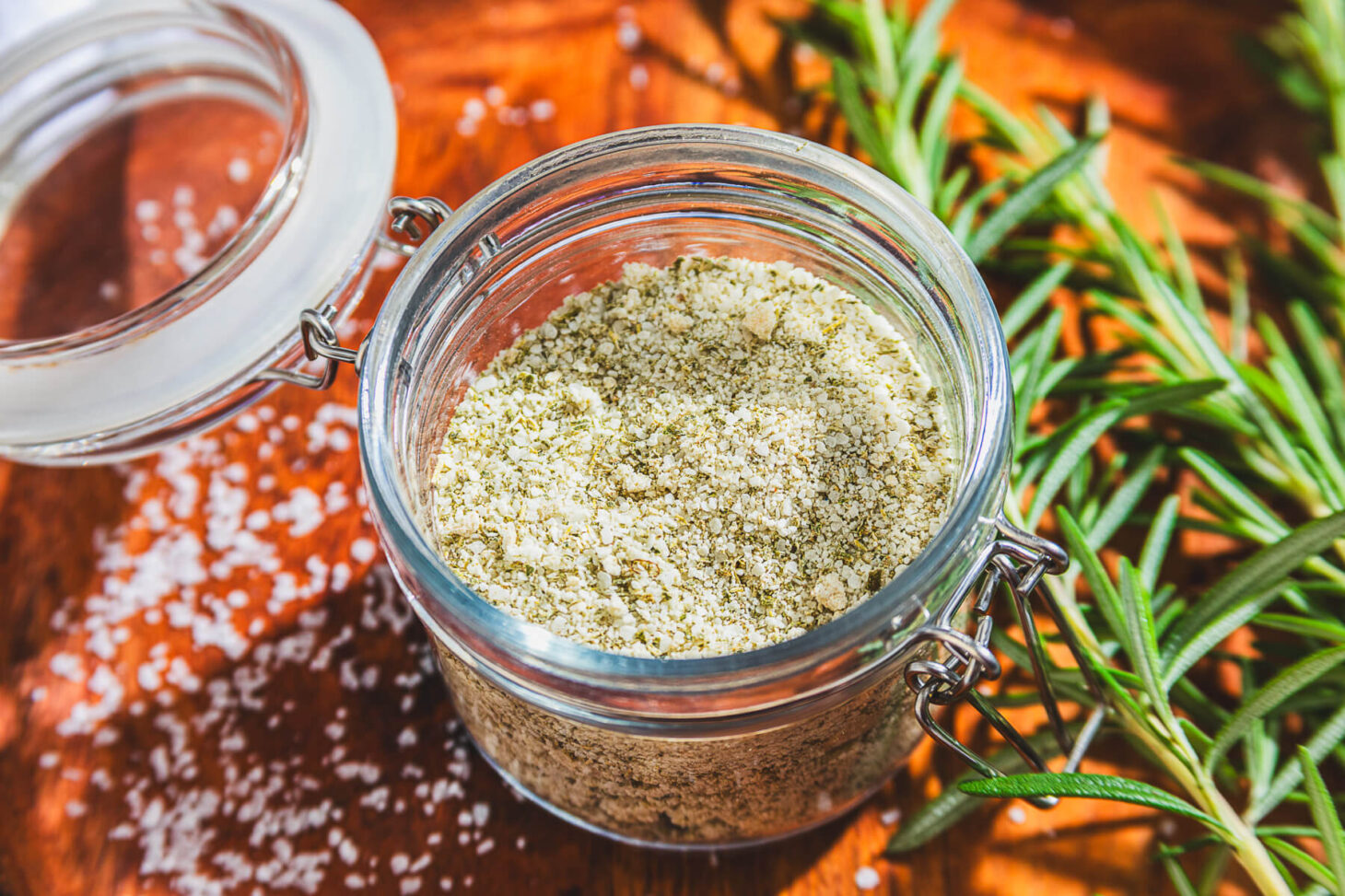
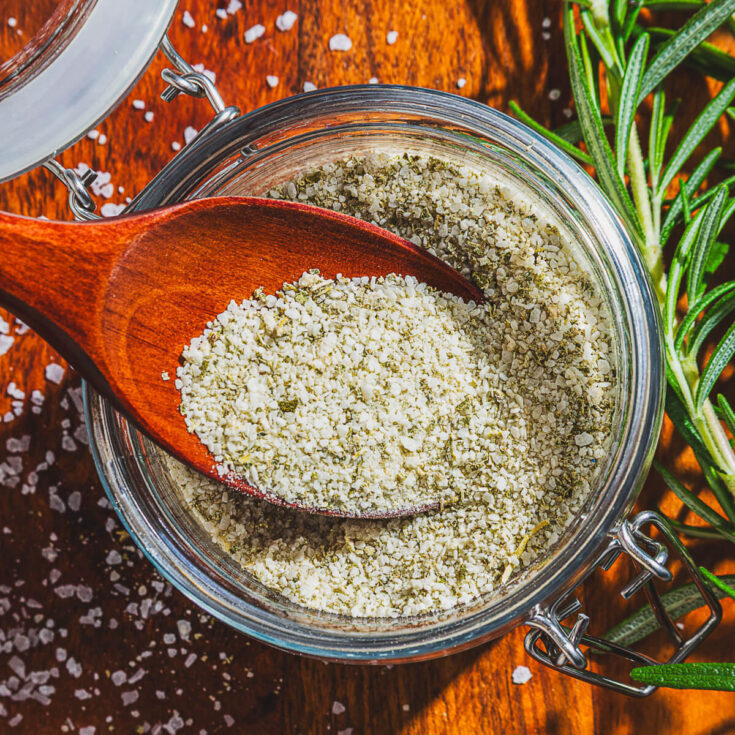
Homemade Rosemary Salt is a simple yet flavourful seasoning that brings the earthy aroma of fresh rosemary and coarse salt together in every sprinkle. When used as a finishing salt, it adds a savoury, herbaceous touch to meats, vegetables, breads, and potatoes. Easy to make and beautifully fragrant, it also makes a thoughtful homemade gift for food lovers.
With the temperature growing cooler every day, it’s time to preserve as many herbs from the garden as I can. Before I put the garden to bed for the winter, I’ll make one last Chive Blossom Vinegar and another batch of Homemade Herb Salt.
Want to save this recipe?
Enter your email below and get this post sent straight to your inbox. Plus, I’ll send you my weekly newsletter featuring the newest and best Dish ‘n’ the Kitchen recipes every week!
Rosemary Salt
Rosemary is my all-time favourite herb, and I love using fresh rosemary in many ways. However, I’m not a fan of using dried rosemary as I find the flavour is just not the same.
Enter this simple Rosemary Salt recipe. Instead of straight dried rosemary, the salt contains additional flavour absorbed from the oils of the fresh rosemary. This is THE herb salt recipe for rosemary lovers!
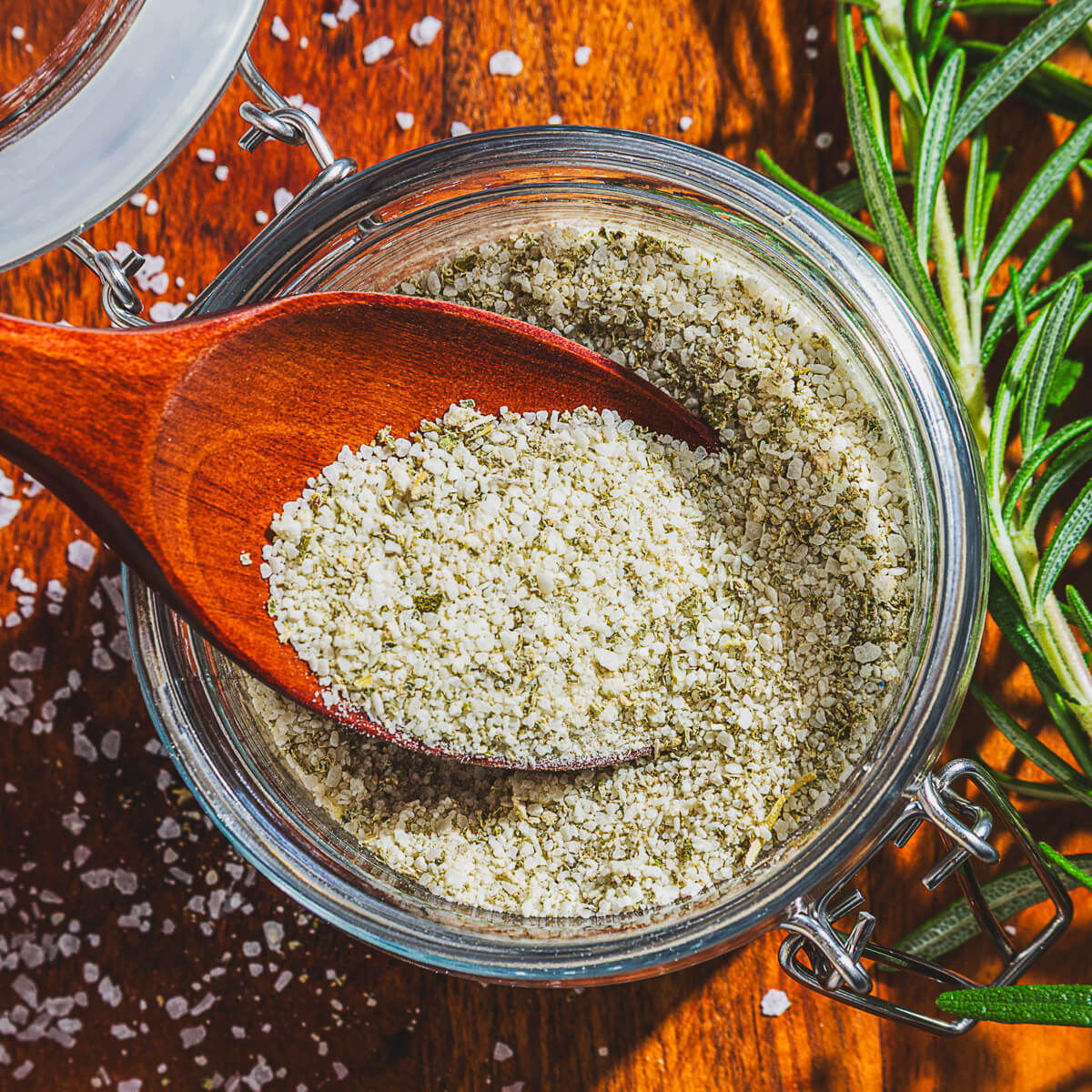
By the way, if rosemary isn’t your favourite herb, use this how-to guide and your favourite herb to make any flavour of herb salt
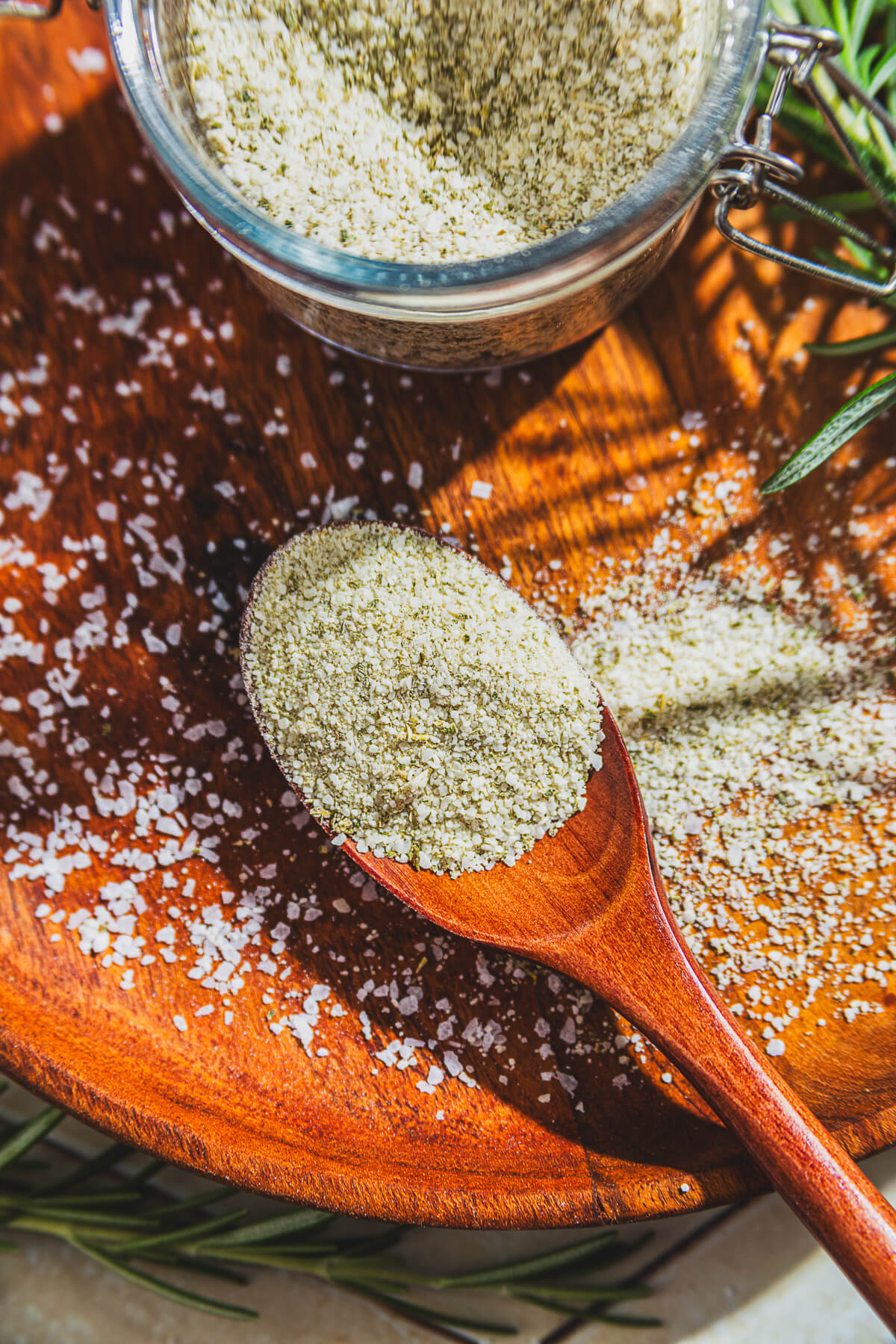
Making a batch of homemade rosemary salt is easily one of the simplest ways to level up your everyday cooking. With just fresh rosemary, coarse sea salt, and two minutes in a food processor or mortar and pestle, you transform basic salt into a fragrant, piney, and woodsy aromatic compound that elevates almost any dish.
Whether you’re tossing it with crispy roasted potatoes, rubbing it onto a thick ribeye before hit the grill, or sprinkling a pinch over warm focaccia just before it bakes, this infused salt brings an instant pop of fresh flavour.
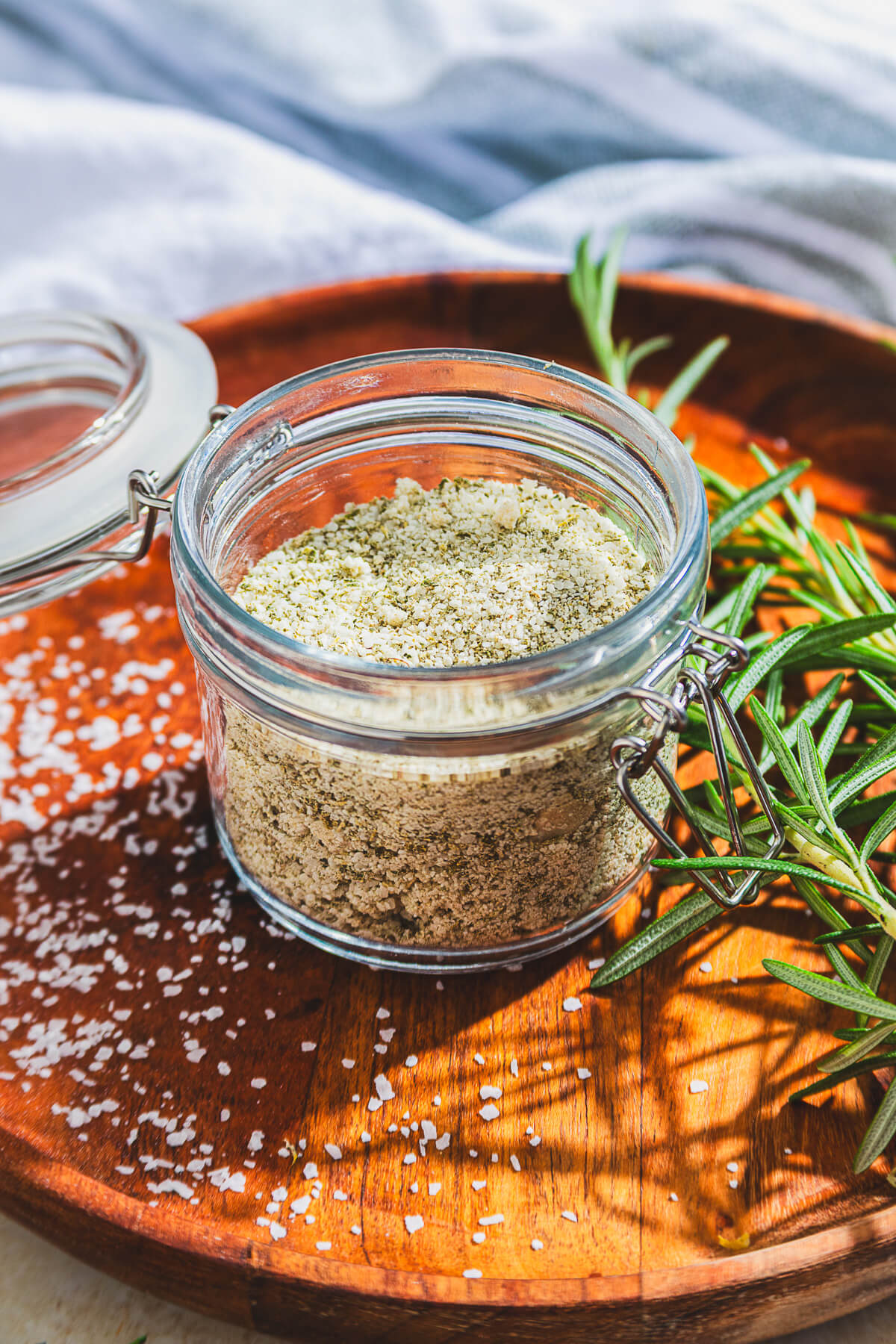
Best of all, it makes a fantastic DIY culinary gift! Package it in small glass jars, tie a bit of twine around the neck, and you’ve got a beautiful, thoughtful gift for any home cook.
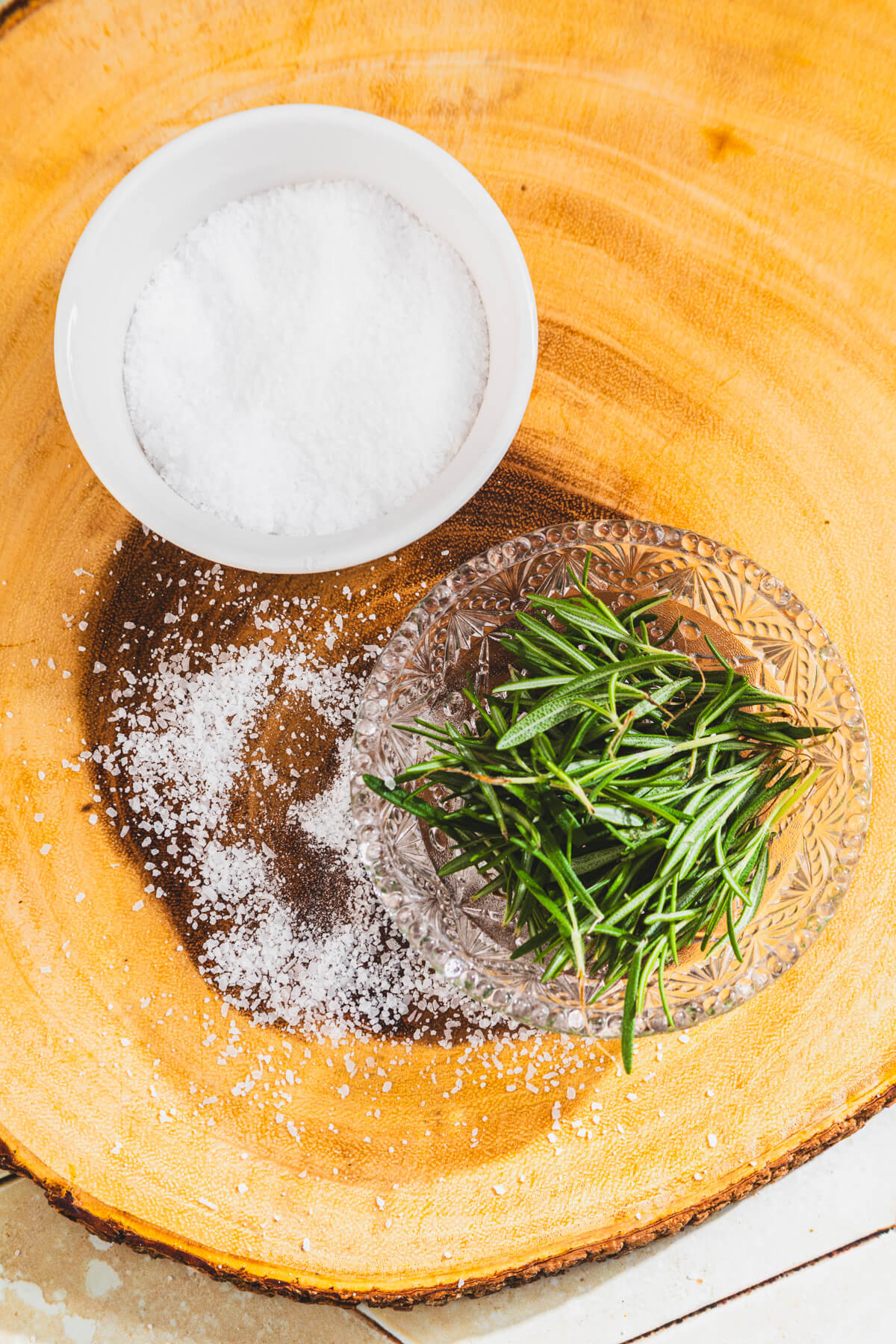
All About Rosemary
Since we’re celebrating it, we may as well learn a bit more about this aromatic herb. Rosemary (Salvia rosmarinus) is one of the most versatile, aromatic, and resilient perennial herbs in the world.
Rosemary’s strong, pungent, and slightly camphorous flavour comes from a concentrated blend of essential oils, primarily eucalyptol and alpha-pinene. It is known for its low moisture content and tough leaves, which allow its flavour to hold up extremely well during long cooking times.
A member of the mint family (Lamiaceae), it is beloved by chefs, gardeners, and herbalists alike for its distinctive needle-like leaves, piney aroma, and rich history.
Ingredients for Rosemary Salt
For this recipe you will need an oven or dehydrator, a food processor or small chopper, a measuring cup, a baking sheet, and parchment paper.
- Salt
- Rosemary
Use a coarse sea salt, kosher salt (like Diamond Crystal or Morton’s), or my personal favourite… sel gris. You’ll find that the irregular flaky grains hold onto the minced herb oils better than fine table salt.
Pro tip: Wash the rosemary well to ensure there are no critters or cobwebs in the finished salt. Carefully dry them before processing. Any excess moisture will turn your crisp salt into a clump or paste.
How to Make Rosemary Salt
Begin by preheating your oven to its lowest setting (170°F–250°F) then line a baking sheet or small baking pan with parchment paper.
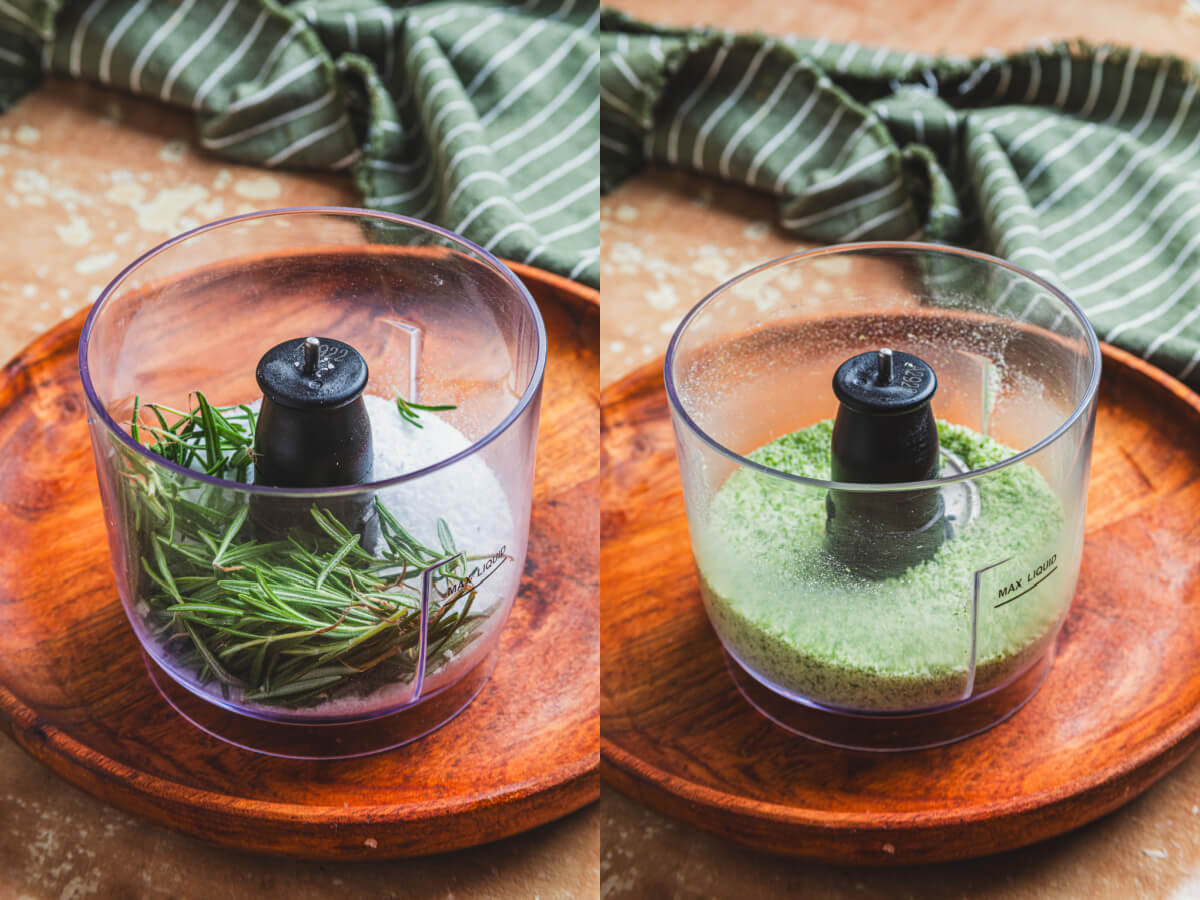
Wash and thoroughly dry the rosemary. Strip the rosemary leaves from the stems and discard the stems. Add the rosemary leaves and salt to a food processor or small food chopper. Pulse until the salt and rosemary are finely chopped and evenly combined.
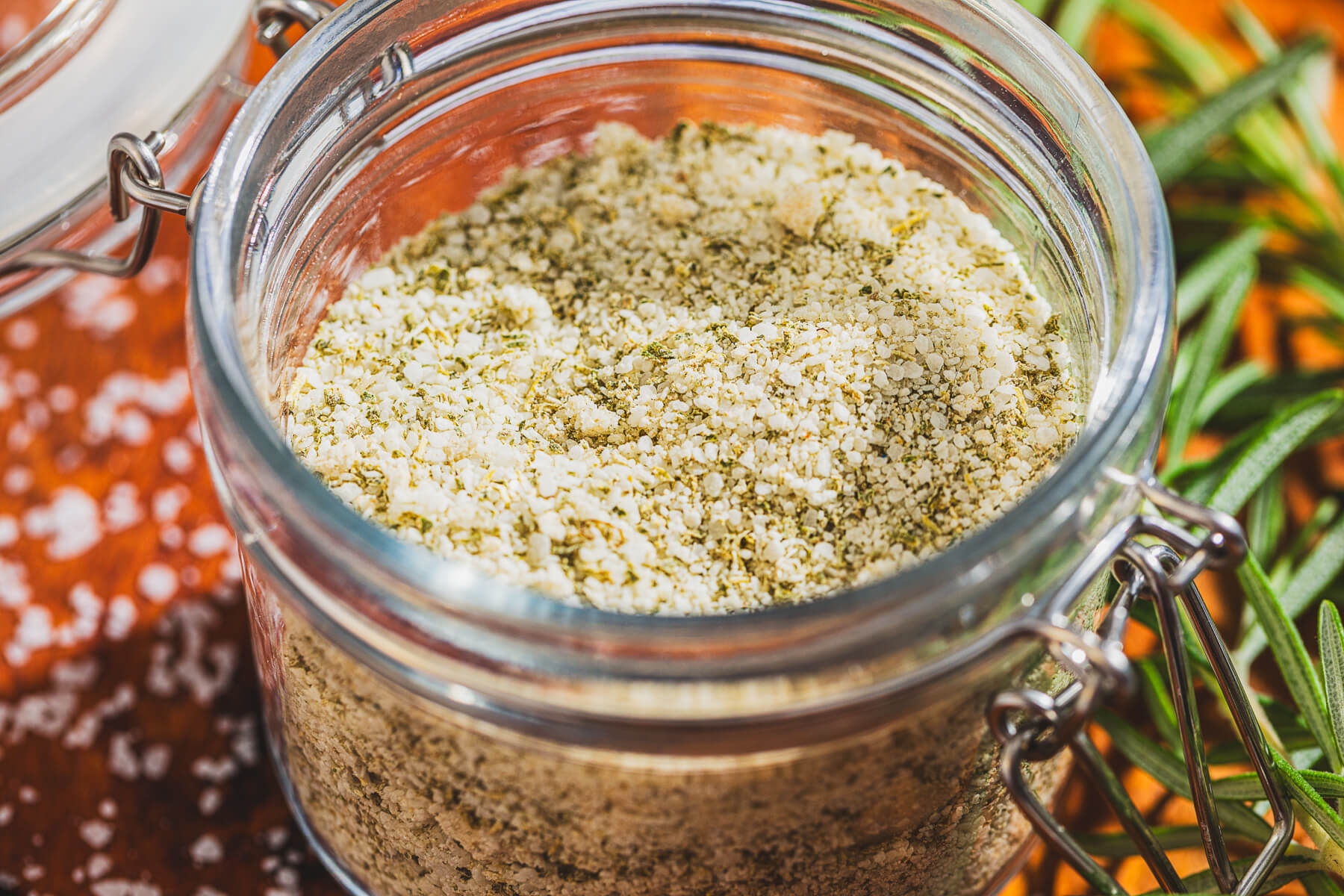
Pro tip: To quickly strip fresh rosemary leaves, hold by the top tip of the stem with one hand and pinch in a downward motion towards the end of the stalk (in the opposite direction of growth) with the other hand.
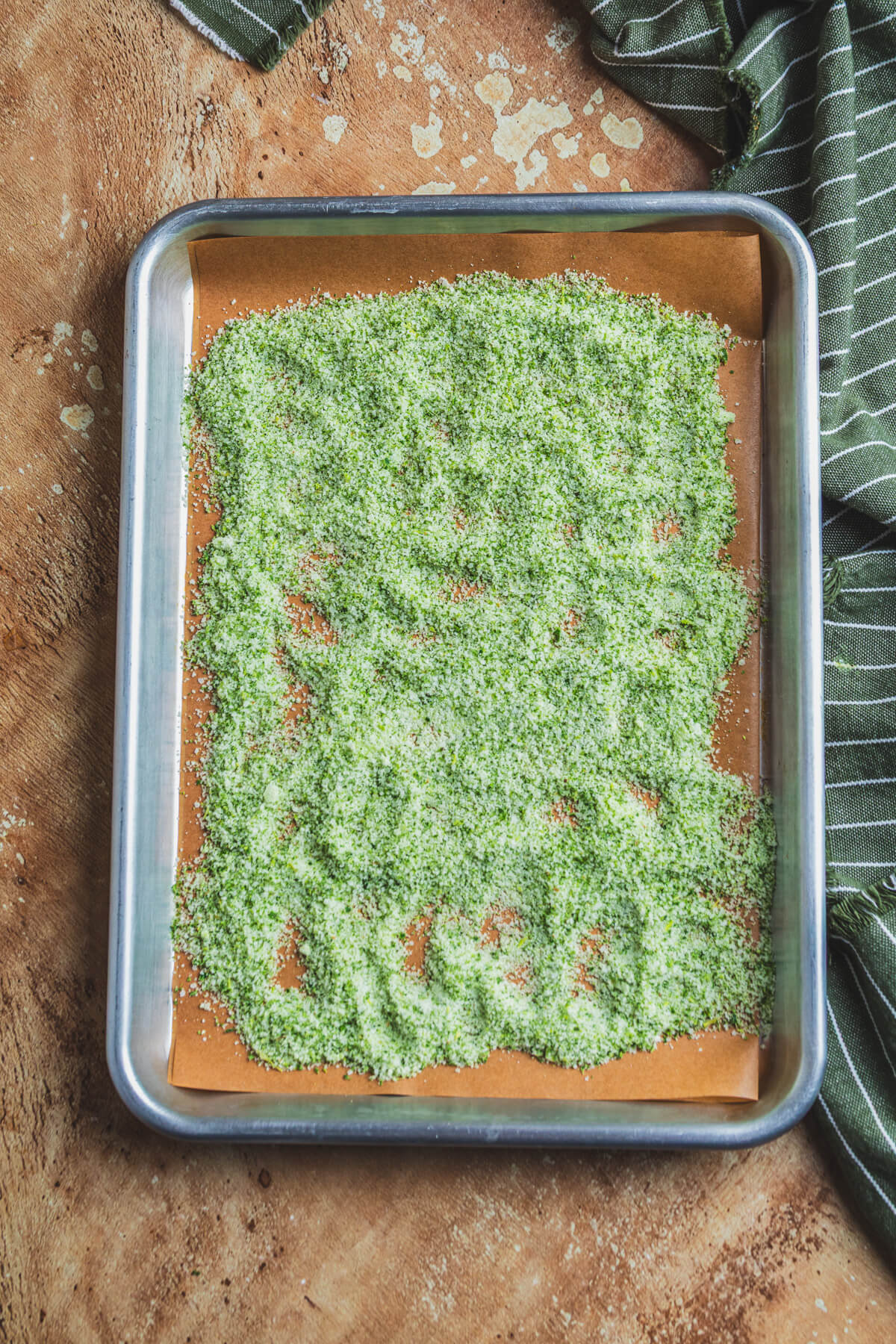
Spread the rosemary salt mixture in a thin, even layer. Bake for 20–30 minutes, or until the salt feels completely dry to the touch. The exact drying time will depend on your oven temperature and the moisture content of the rosemary.
Alternatively, allow the rosemary salt to air-dry on the baking sheet for 1–3 days, stirring occasionally, until fully dry.
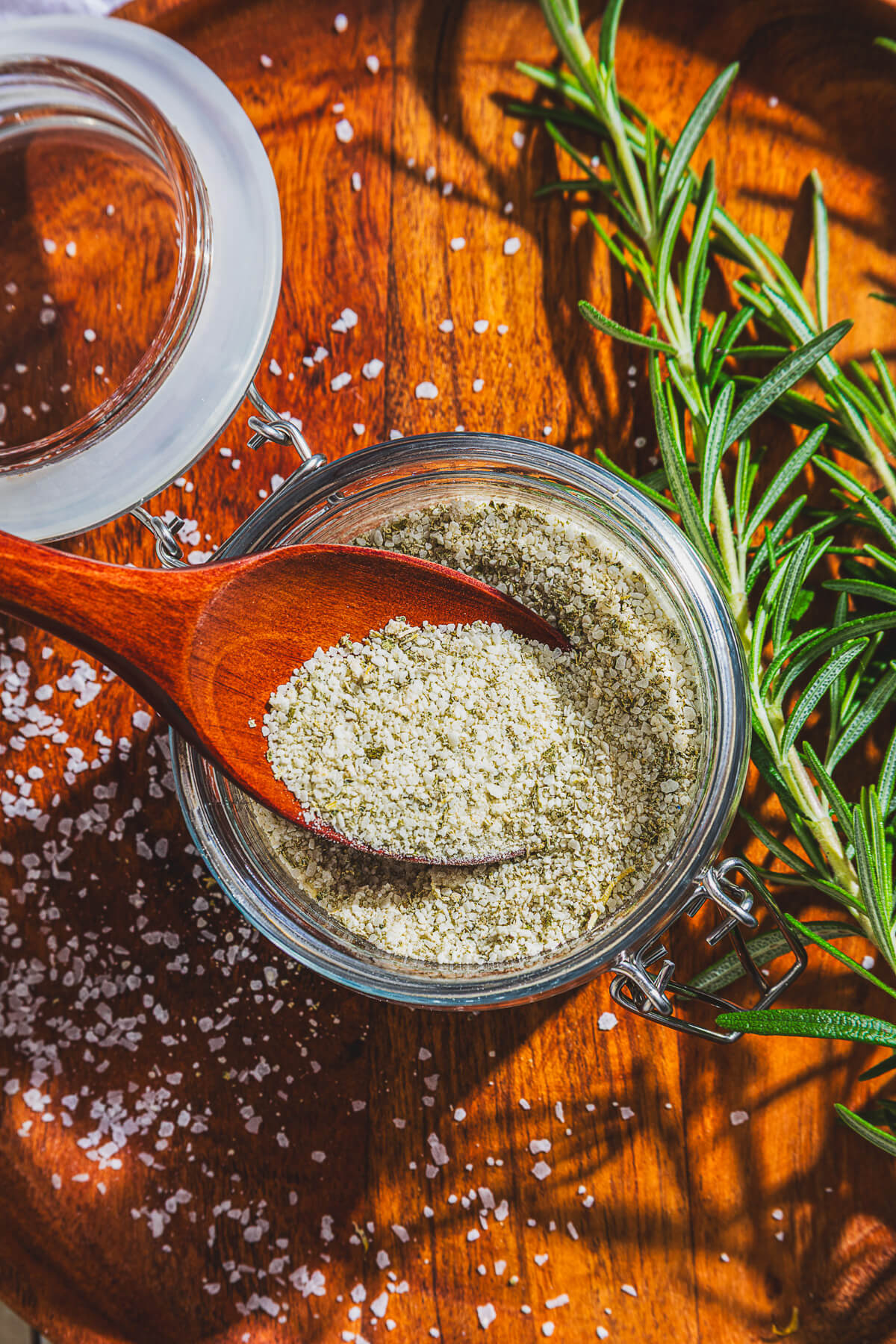
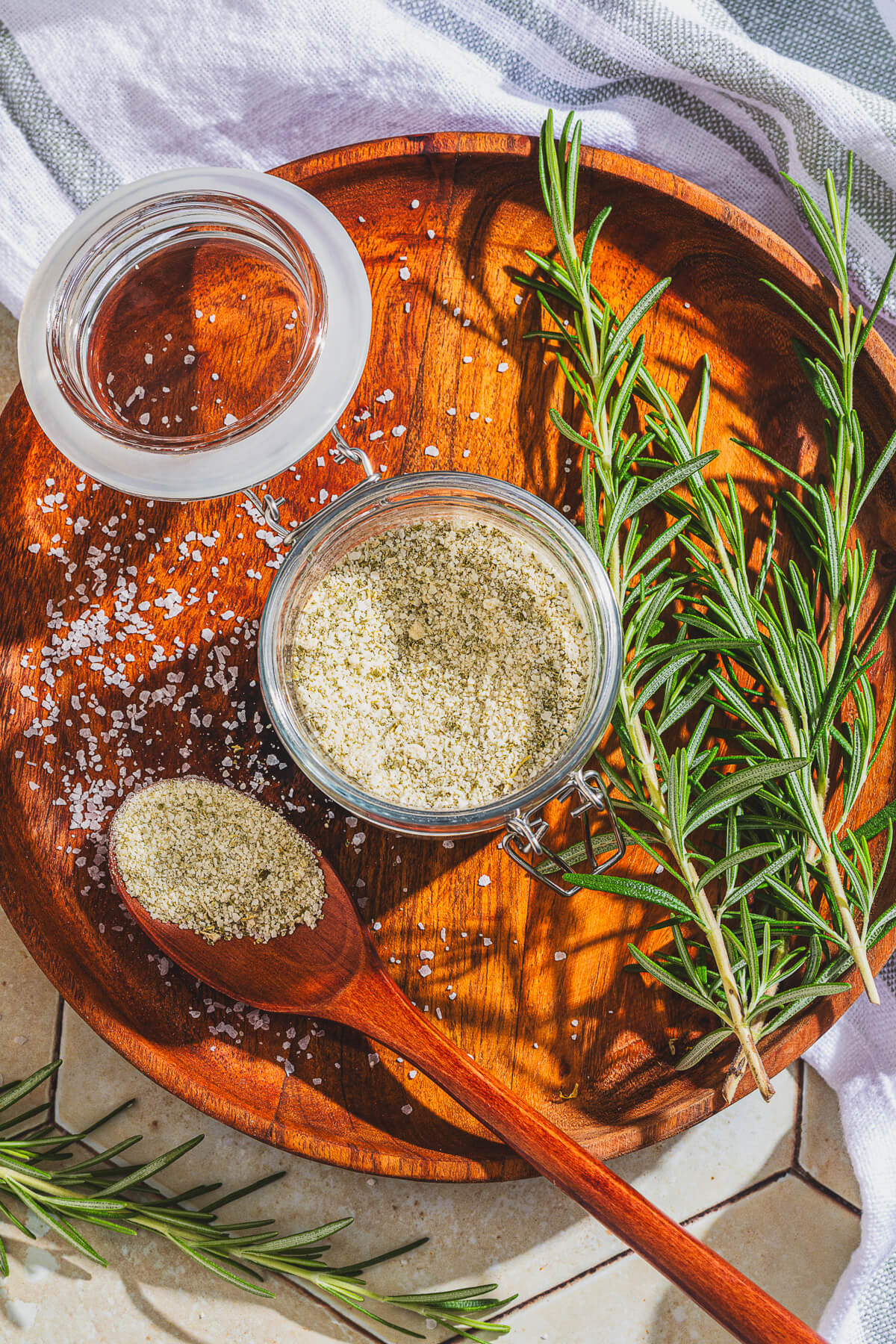
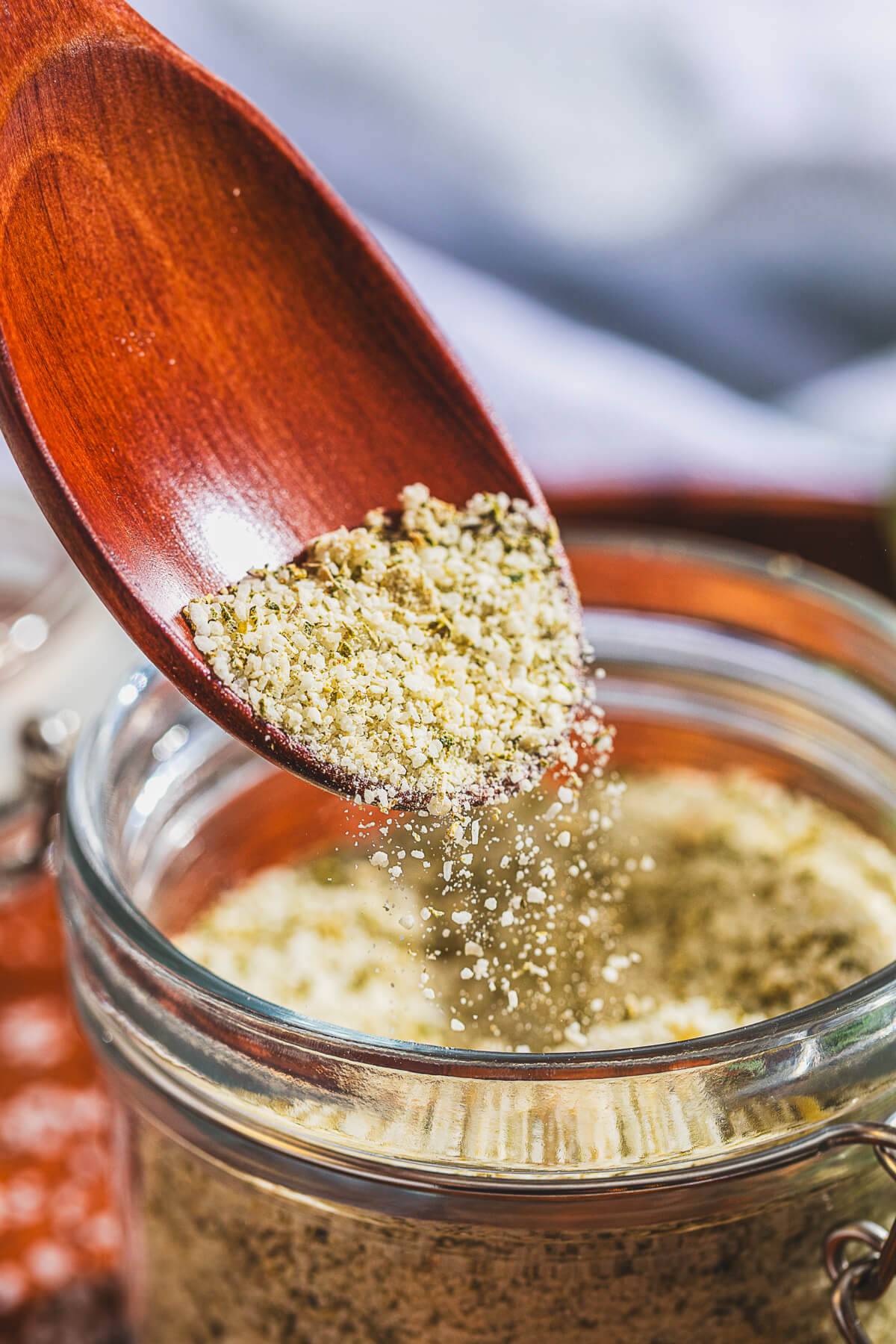
Transfer the dried rosemary salt to an airtight container for storage. It’s delicious as a finishing salt on steaks, chicken, roasted vegetables, potatoes, breads, and more.
Storage and Shelf Life
Store rosemary salt in an airtight glass jar in a cool, dark pantry. Properly blended and dried, it will retain its punchy flavour for up to a year.
Hi! I’m Bernice Hill, the heart and soul behind Dish ‘n’ the Kitchen. It is my pleasure to share easy to follow recipes that are delicious, nutritious, and approachable for the whole family.
If you make this Homemade Rosemary Salt recipe, I’d love to hear about it in the comments section or in a recipe rating. Be sure to follow me on Facebook and Pinterest for my latest recipes. Also, if you do make this recipe, please share your photos and tag me on Instagram. I hope you like this recipe!
How to Make Rosemary Salt
Homemade Rosemary Salt is a simple yet flavourful seasoning that brings the earthy aroma of fresh rosemary and coarse salt together in every sprinkle. When used as a finishing salt, it adds a savoury, herbaceous touch to meats, vegetables, breads, and potatoes. Easy to make and beautifully fragrant, it also makes a thoughtful homemade gift for food lovers.
Ingredients
- ½ cup coarse Kosher Salt
- ¼ cup fresh Rosemary
Instructions
- Preheat oven to its lowest setting (170°F–250°F). Line a baking sheet or small baking pan with parchment paper.
- Strip the rosemary leaves from the stems.
- Add the rosemary leaves and salt to a food processor or small food chopper.
- Pulse until the salt and rosemary are finely chopped and evenly combined.
- Spread the rosemary salt mixture in a thin, even layer.
- Bake for 20–30 minutes, or until the salt feels completely dry to the touch. The exact drying time will
depend on your oven temperature and the moisture content of the rosemary. - Alternatively, allow the rosemary salt to air-dry on the baking sheet for 1–3 days, stirring occasionally, until fully dry.
- Transfer the dried rosemary salt to an airtight container for storage.
- Use as a finishing salt on steaks, chicken, roasted vegetables, potatoes, breads, and more.
Nutrition Information:
Yield:
16Serving Size:
1Amount Per Serving: Calories: 13Total Fat: 1gSaturated Fat: 0gUnsaturated Fat: 0gSodium: 3076mgCarbohydrates: 3gFiber: 2gProtein: 0g
Nutritional calculation was provided by Nutritionix and is an estimation only. For special diets or medical issues please use your preferred calculator.